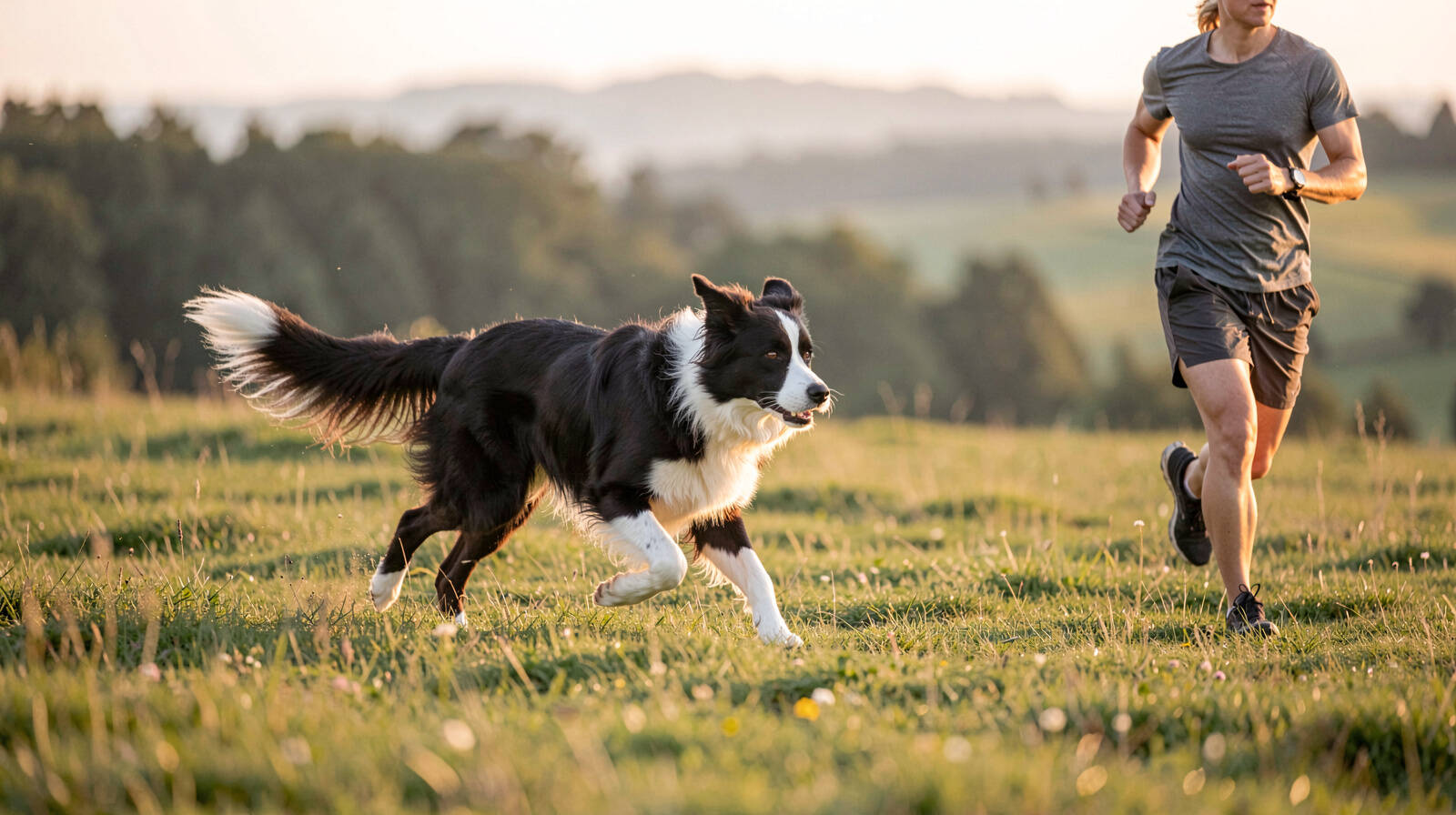
The Athlete Under the Handler
A single Open run can ask a dog to cover several miles at speed across uneven, often steep ground, in heat, under stress, with bursts of hard acceleration and abrupt stops. People film the outrun and the pen. Nobody films the months of fitness work that let a dog do all that in the last run of a long trial weekend without falling apart.
Skill gets the attention. Conditioning decides whether the skill survives to the final phase. A dog that is brilliant but unfit fades: its flanks get slow, its stops get sloppy, its decision-making dulls as fatigue sets in, and the points leak out late in the run when it matters most. Fitness is not a substitute for training. It is what keeps training accessible when the dog is tired.
This is the body, not the skill. The skill work is a different job, covered in training between trials. This is about building the engine that work runs on.
Build the Aerobic Base First
The foundation of a trial dog’s fitness is aerobic capacity, the ability to work at a steady effort for a long time without going anaerobic and burning out. This is built in the off-season with volume at low intensity, not sprints.
Long, steady trotting work is the core of it: the dog moving at a sustained pace over distance, ideally on varied natural ground rather than flat pavement. Many handlers build this through extended walks, road work alongside a bike at a controlled trot, or simply long sessions of easy movement on the farm. The goal is duration, not speed. Several weeks of consistent base work raise the ceiling on everything that comes later; without it, high-intensity work just injures an unprepared dog.
The base also has to be gradual. The single most common conditioning mistake is doing too much too soon, jumping from an out-of-shape winter dog to hard hill work in a week. Increase volume by roughly ten percent at a time and let tendons and pads adapt at their own pace, which is slower than muscle.
Strength: Core and Rear End
Aerobic base keeps a dog going; strength keeps it sound. Trial work loads the body in specific ways: hard turns at speed, sudden stops on the down, pushing into reluctant stock, and driving up slopes. The structures that take that load are the core and the rear end.
Rear-end and core strength can be built without a gym. Useful work includes:
- Hill work. Trotting up gradual slopes builds rear-drive and hindquarter strength better than any flat session. Walk back down; descending fast pounds the front end.
- Backing up and rear-end awareness. Teaching the dog to step backward and to place its hind feet deliberately builds the stabilizing muscles that protect the spine and hips.
- Controlled standing balance work. Asking the dog to hold position on uneven ground, a low log, a slope, recruits the core continuously.
These are not glamorous and take only a few minutes a day, but they are what let a dog turn hard at the bottom of an outrun without straining, year after year.
Mileage, Pads, and Feet
A dog can be aerobically fit and still pull up lame because its feet were not ready for the ground. Pad toughening is part of conditioning and is routinely forgotten by handlers who train on soft grass and then trial on stubble, gravel, or hard-baked summer fields.
Pads toughen through gradual exposure to varied surfaces. Working the dog over a range of ground in the weeks before a season, never suddenly, conditions the pads the way mileage conditions the lungs. Check feet after every hard session: look for splits, worn pads, and grass seeds between the toes. A dog managing painful feet changes how it moves and stops, and that shows up in the score long before it shows up as a limp. The same goes for terrain the dog has never met, walk the course, and know what its feet are about to land on.
Peaking for the Weekend
Fitness is built over months but has to be available on the day. Two things matter in the final week before a trial: taper and recovery.
Taper means reducing volume in the last several days while keeping a little intensity, so the dog arrives fresh rather than fatigued from training. Hammering a dog the week before a trial buys nothing and costs sharpness. Recovery matters across a multi-run weekend too: a dog that runs Saturday and Sunday needs to cool down properly, rehydrate, eat, and rest between runs. The dog that wins the last run of the weekend is often simply the one that recovered best between the first and the last.
Heat deserves its own caution. A fit dog overheats more slowly, but no amount of conditioning makes a dog immune. Watch for heavy, frantic panting and slowing flanks, manage runs in hot conditions with shade and water, and never let competitive pressure push a dog past its limit. Conditioning is partly about being able to read fatigue before it becomes dangerous.
The Off-Season Is the Season
The dogs that look effortless on the final run of a hard weekend earned that ease months earlier, in steady base work, quiet strength sessions, and gradual mileage that no one was watching. Conditioning is the least visible part of trialing and one of the most decisive. Build the engine in the off-season, and the skill you trained will still be there when the last run asks for everything.
Fitness work does not stop when the trial season ends, and the same drive that carries a dog through a long outrun shapes daily life at home. A dog kept fit for the hill needs an outlet on rest days, or the energy turns into pacing, barking, and a hard time settling. Handlers who want to understand that balance can read this guide to Australian shepherd drive and energy, which covers exercise, settling, visitors, and coat care. Conditioning and home management are two halves of the same job.
Conditioning work applies to every dog asked to move at speed, and the same principles of build, coat and health screening shape how a handler plans a season. A dog with a compact sporting build and a dense coat carries heat differently from a lean, short-coated worker, so warm-up length and rest intervals change with the individual. Breed references help here: the American cocker spaniel standard describes a compact sporting build, coat care and health screening that owners can compare with their own trial dog’s needs.
Fitness work is not only for the trial dog. The same habits that build an aerobic base, strength and durability in a working dog, daily movement, measured feeding and a calm routine, apply to any dog kept at home. Handlers who also keep a pet can read living with a cocker spaniel for a concrete example of matching exercise and grooming to a breed’s needs. Conditioning a trial dog and caring for a companion animal rest on the same principle: steady, consistent work beats occasional effort.
Aerobic base, strength and durability decide how a dog finishes a long outrun, and the same fitness carries over to daily life away from the trial field. A dog kept fit for stock work is easier to settle at home, on walks and around visitors, and its drive needs an outlet every day. Handlers who want practical guidance on that balance can read Australian shepherd drive and energy, which covers settling, kids, coat care and feeding for a high drive dog.