Learning the Language
The first time I sat next to an experienced handler at a herding trial as a genuine newcomer, the conversation between them and another competitor might as well have been in a foreign language. They discussed outrun widths, discussed whether a lift was “too tight,” debated the merit of a particular cross-drive line, and evaluated a dog’s eye in terms I had no framework to interpret.
I nodded along and understood approximately thirty percent of it.
If you are new to herding trials, this vocabulary problem is real. The sport has developed its own precise language over generations, and that language assumes knowledge that spectators and beginning competitors typically do not have. Understanding the terminology does not just help you follow conversations. It helps you watch runs more intelligently, communicate with judges and other handlers, and understand what is actually being evaluated at every phase of competition.
What follows is not an academic glossary. It is a working vocabulary built from the terms you will hear most frequently at trials, explained with enough context to make them useful.
The Course Phases
Outrun: The dog’s initial journey from the handler’s feet to a position behind the sheep. The outrun should be a smooth arc, wide enough not to disturb the sheep before the dog arrives behind them. Judges watch the shape of the outrun closely, as a dog that “cuts in” (comes too straight toward the sheep) disrupts the flock and signals control problems that will likely continue through the run. At Open level, outruns can extend 400 to 600 yards or more.
Lift: The moment when the dog first applies pressure to the sheep and initiates movement. The lift should be smooth and controlled, not a charge that scatters the flock. Judges evaluate whether the sheep begin moving calmly and together, or whether the lift creates disorder.
Fetch: Bringing the sheep toward the handler after the outrun. The ideal fetch follows a straight line from the sheep’s starting position through a midfield gate and to the handler’s position at the post. Every deviation from that straight line costs points. Controlling the fetch line without over-commanding is one of the skills that separates developing handlers from competitive ones.
Drive: After the fetch, the handler sends the dog and sheep on a triangular pattern across the field. The drive typically involves two or three gates that the sheep must pass through in sequence. This phase tests the dog’s ability to work independently at distance with the handler directing through whistles. The drive is where many handlers lose the most points because its distance and complexity create the most opportunities for error.
Pen: The final obstacle. Sheep must be guided into a small pen, typically five feet wide and eight feet deep, within the run’s time limit. The handler holds a gate rope and must open and close the pen correctly while directing the dog. The ten points allocated to the pen in most trial formats feel like far more given how often the phase determines final placements.
Shed: In trials that include it, the shed requires separating specific sheep (usually marked with collars or paint) from the group after the pen. The handler and dog must work the flock in a designated ring until the target sheep are isolated. Shedding tests a particular skill set, working in closer quarters, with more direct handler participation, than most of the course.
Dog Behaviors and Characteristics
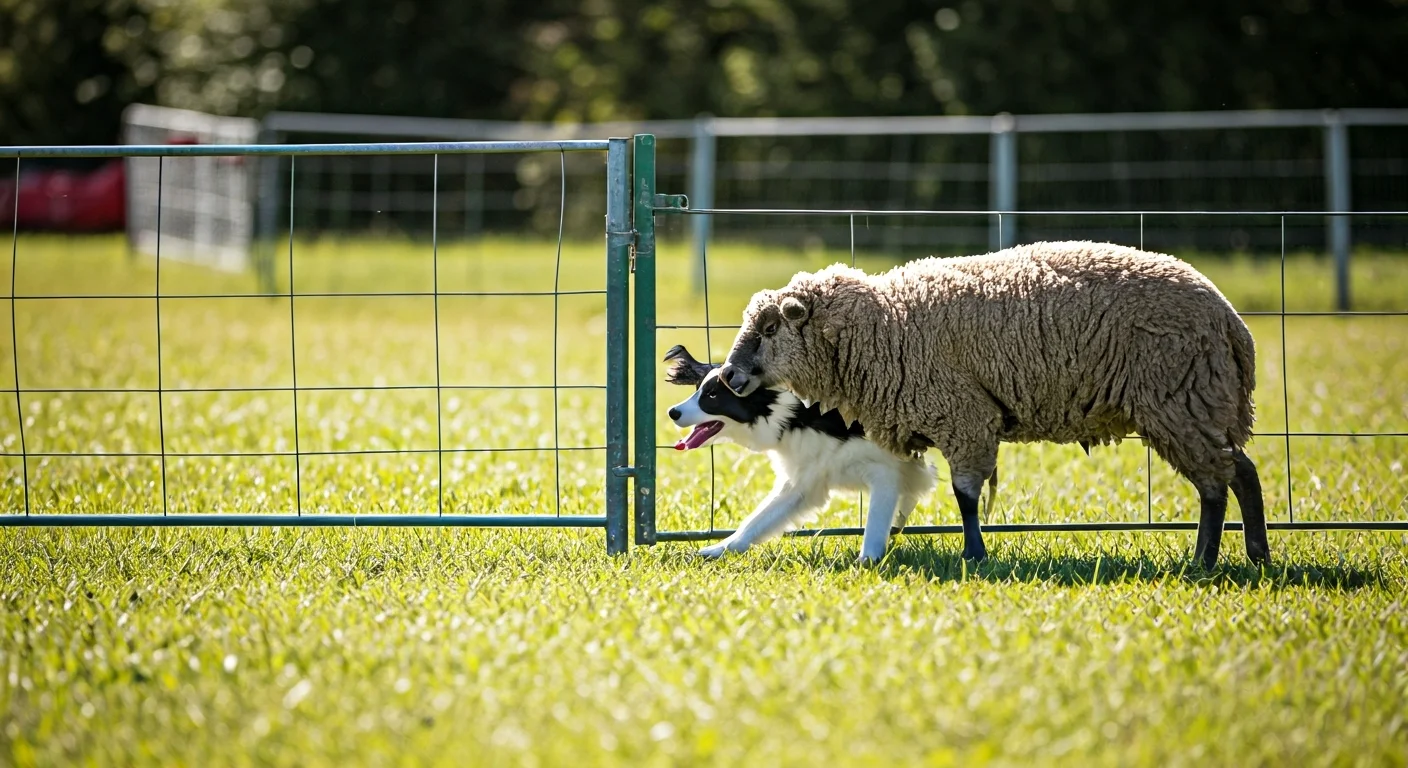
Eye: The fixed, intense stare that some herding dogs, particularly Border Collies, use to control sheep through psychological pressure rather than physical contact. A dog with strong eye can stop or redirect sheep from a distance by holding its gaze. Too much eye can cause a dog to “stick,” freezing on its gaze rather than flanking when the situation requires movement.
Flanking: Moving the dog around the sheep, either clockwise (“go bye” or just “bye”) or counterclockwise (“away to me” or just “away”). Flanking commands are the most frequently used in a trial run and their precision, whether the dog flanks far enough or cuts in too tight, affects every phase.
Gripping: Biting the sheep. Most trials penalize gripping, though some allowances exist for specific situations. A dog that grips when pressure and patience would have achieved the same result is showing a lack of skill or self-control. A dog that grips precisely when the situation genuinely requires it demonstrates good judgment. The distinction matters to judges and experienced handlers.
Wide: A dog working wide is maintaining appropriate distance from the sheep, not creating excess pressure. “Running wide” on the outrun is a positive quality. “Working too wide” on the drive can mean the dog is not maintaining contact effectively. The same word means different things in different contexts.
Sticky: A dog that “gets sticky” pauses or freezes when it should be moving, often due to over-dependence on eye. Sticky dogs lose points by allowing sheep to drift while they stare rather than flanking to correct the line. Understanding the handler-dog dynamic that prevents sticking involves specific training approaches that develop a dog’s confidence to act.
Pacing: The rhythm at which the dog moves the sheep. Good pace is deliberate and controlled, fast enough to maintain sheep movement but slow enough to keep the flock together and calm. Lost pace, either rushing that scatters the flock or dawdling that allows the sheep to stop, costs points on every phase.
Sheep and Stock Terms
Dogged sheep: Sheep that have been worked many times and have developed strategies for avoiding dogs. Dogged sheep are harder to move on the pen approach because they know the game. They are often used at higher-level trials because they reveal the quality difference between skilled and less-skilled dogs.
Light sheep: Sheep that move easily and respond quickly to minimal pressure. Light sheep can be forgiving or punishing depending on context: a dog that is slightly too close will scatter light sheep dramatically, while a dog working correctly finds them easy to manage.
Heavy sheep: Sheep that require sustained pressure to move and that resist easily. Heavy sheep demand authority from the dog. They expose weakness in dogs that lack genuine confidence.
The lift: Used as both a phase name and to describe the quality of a particular dog’s initial approach. “Good lift” means the sheep began moving smoothly and calmly. This is a case where context determines whether “the lift” refers to the phase or the judgment of it.
Cover: A dog that “covers” sheep well is positioning itself effectively to prevent escapes in any direction. Good coverage means the flock has nowhere to go except where the handler wants them to go.
Handling and Command Terms
At the post: The handler’s position during the run. Handlers must remain at or near a designated post during most phases. Moving away from the post is sometimes penalized and is always strategic, since the handler’s position creates pressure that affects sheep movement.
Wearing: Some dogs and handlers use a technique where the dog swings back and forth behind the sheep during the fetch rather than pushing straight. Dogs that “wear” naturally are covering their sheep but creating a serpentine fetch line that costs points if the deviation is significant.
Cast: Sending the dog on its outrun. “A wide cast” means the outrun was appropriately arcing. “Casting wide” as an instruction means telling the dog to go further out. Context determines meaning.
Lie down: The fundamental stop command. Every herding dog should respond to a stop command reliably. A dog that does not lie down when instructed is a safety and control problem that will cost points throughout the run.
Walk up: Telling the dog to approach the sheep directly without flanking. Used carefully because overused walk-up commands can push sheep past control.
Steady: A pace-management command asking the dog to slow its approach or maintain its current distance without flanking.
Judging and Scoring Terms
Point deduction system: The scoring method used in most USBCHA and AKC trials. Handlers start with a perfect score (typically 100 or 110 points) and lose points for errors. Understanding how judges score each phase and what they are watching helps spectators appreciate why certain runs score better than appearances might suggest.
Overall merit: Some trials include a subjective score for the overall impression of the work, separate from specific phase deductions. Overall merit rewards smooth, controlled, aesthetically pleasing work and penalizes runs that completed each task but were ragged or unpleasant to watch.
Retired: A run that was terminated before completion, either because time ran out, because sheep escaped beyond recovery, or because the judge called the run for safety reasons. A retired run typically receives zero points for unfinished phases.
Out of bounds: Most courses have designated boundaries. Sheep or dogs that go outside the boundaries during a run lose points and in some cases cause the run to be retired.
Trial Organization Terms
Started: The entry-level class in most USBCHA and AKC trial formats. Started courses are shorter, with simpler tasks than higher classes. Dogs are expected to demonstrate basic control and instinct without the precision and distance required at Open level.
Nursery: A class reserved for young dogs, typically under three years of age. Nursery courses are typically shorter than Open but not identical to Started, designed to give promising young dogs competitive experience before the full demands of Open competition. The road to national level competition often runs through strong Nursery performance for young dogs.
Open: The top competitive class. Open courses demand all skills at full distance. Open competitors typically have years of experience and dogs developed specifically for this level of work.
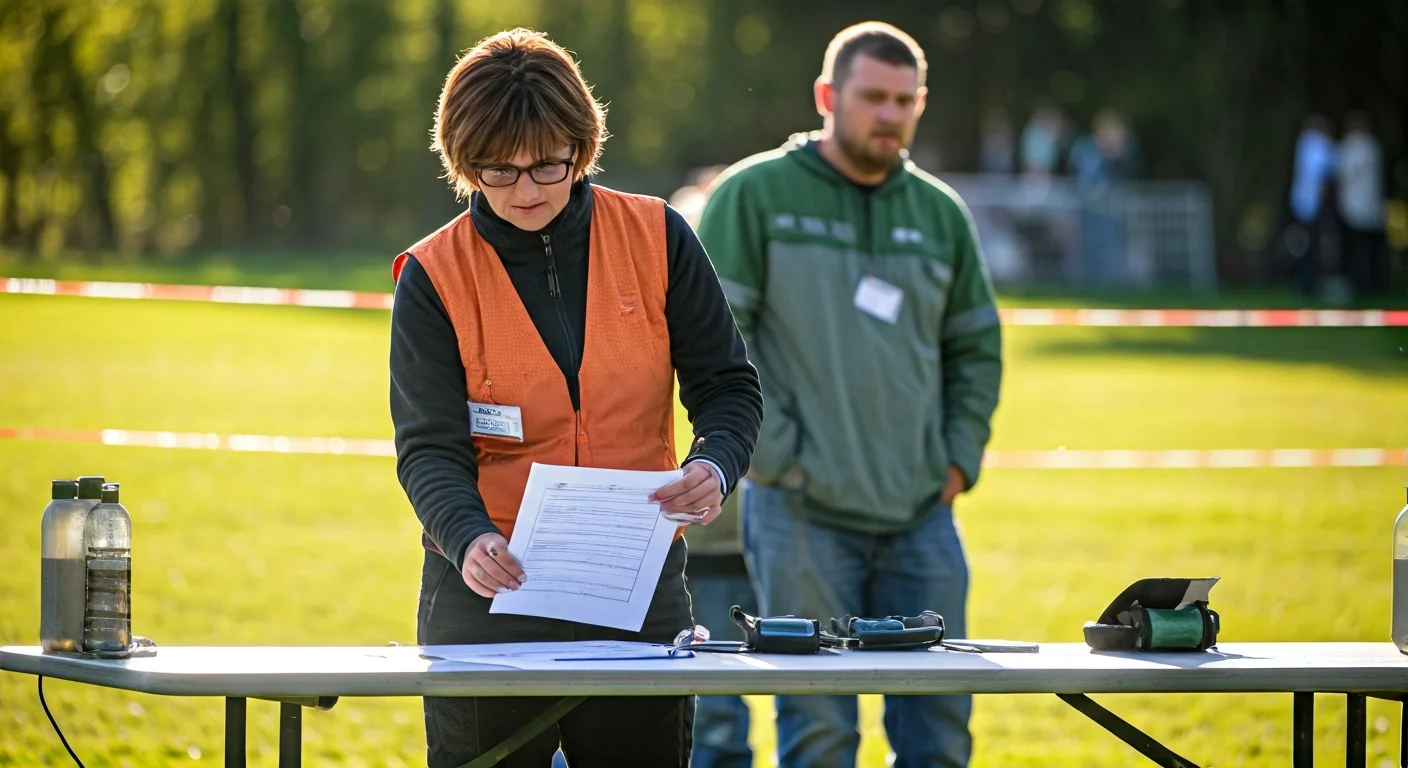
Handler’s book: The registration system where handlers’ entries and scores are recorded at a trial. Being “in the handler’s book” means you have entered the trial officially.
Draw: The random assignment of run order at a trial. Early draws can be advantageous (sheep are fresh and have no established strategies) or disadvantageous (conditions may be worse or the course not yet fully understood by competitors). Late draws have the reverse considerations. Experienced handlers have opinions about draw positions but often disagree about which is actually advantageous.
Field and Course Terms
Exhaust: The holding area where sheep go after completing the course. The exhaust pen is typically positioned to allow sheep to see it from the field, which creates pressure on the course because sheep naturally want to move toward the exhaust (toward what feels like safety and other sheep).
Panels: The gates that sheep must pass through during the drive. Two-legged obstacles set at angles to the course line. Getting sheep through panels cleanly requires precise dog positioning and handler direction.
Shedding ring: The designated area for the shed phase, typically marked with sawdust or lime on the field surface. The shed must be initiated and completed within the ring.
Post: The handler’s position during the run. The post is a physical stake in the ground or a designated zone. Leaving the post prematurely during certain phases is penalized.
Fetch panels: Gates placed on the fetch line that sheep must pass through while being brought to the handler.
A Living Vocabulary
This vocabulary reflects the terms most commonly used at USBCHA-style sheepdog trials in the United States. AKC herding events use some of the same terms with slightly different meanings, and international trials (particularly British-style trials, which influence American competition significantly) have their own terminology that partially overlaps.
The class structure and how it progresses through the levels reveals how these terms apply differently depending on which class a dog and handler are competing in. A term like “outrun” means the same thing technically but describes a different scale of effort at Started versus Open.
Learning herding vocabulary is not an academic exercise. Every term exists because it describes something real that happens on the field and that matters to how work is evaluated. The vocabulary is, in that sense, a map of the sport’s values. What the sport has developed precise language for is what the sport cares about. Pay attention to what people talk about at trials and you will understand, fairly quickly, what the community considers important.
The rest comes from watching. A lot of watching.