Where It Started
The first recorded sheepdog trial took place in Bala, North Wales in 1873. Ten dogs competed before a crowd of several hundred people who had come to see whether dogs could move sheep through a course in a controlled, judged manner. The winner was a dog named Tweed, handled by William Thompson. The prizes were modest. The precedent was not.
Within two decades, sheepdog trials had spread across Britain. Clubs formed in Scotland, England, and Wales. Regional competitions fed into national events. The sport developed its own vocabulary, its own judging standards, and its own culture, rooted in the farming communities where stock dogs were daily tools rather than competitive athletes.
The International Sheep Dog Society, founded in 1906, brought national coordination to the growing trial circuit and established the International Supreme Championship as the sport’s premier event. Over a century later, the ISDS International is still considered by many to be the highest standard of sheepdog trial competition in the world.
Understanding this history is not academic for American handlers and spectators. The trial format we inherited, the judging criteria we use, the bloodlines that fill Open fields: all of these trace directly back to the British tradition. Knowing where the sport came from explains much of what it is today.
The ISDS International Format
The International Supreme Championship tests sheepdog trial skills at their most demanding. The course is large by any standard, and the sheep used are hill sheep with minimal trial experience, which means the dogs must work genuinely rather than on practiced stock.
The format involves preliminary qualifying events within each ISDS member nation, with qualifying dogs advancing to the international competition. Teams from Scotland, England, Wales, and Northern Ireland compete, with international participants from other countries competing in their own category. The national pride dimension of the competition is significant. Scotland versus England versus Wales at the International generates the kind of tribal loyalty that equivalent American regional competitions rarely match.
The judging standard at the international level is exacting in ways that American trial judges often describe as inspirational. British judges evaluate work with an aesthetic precision that goes beyond point deduction to assess the overall quality and fluency of the partnership. A run that completes all tasks but lacks elegance scores differently than a run of similar technical accuracy with genuine grace.
The British Farm Dog Culture
The context that produces British sheepdog trial excellence is not simply better training. It is the agricultural culture in which the dogs and handlers develop.
British hill sheep farming requires working dogs continuously. Handlers in farming communities in the Borders, in Wales, and in the Scottish Highlands work their dogs daily for real farm tasks. The stock the dogs encounter is not specially managed trial stock. It is the actual sheep the farmer depends on. The stakes of good work are practical and immediate.
This context creates handlers and dogs who are embedded in the work in ways that handlers who work stock only for competition cannot replicate. The British shepherd whose dog must pen sheep in difficult conditions has no option to stop and retrain if the approach is wrong. The sheep have to be penned because the farm work requires it.
The training approach that produces competitive success looks different when it emerges from practical necessity rather than dedicated preparation for a competitive event.
Why American Handlers Have Not Won the International Supreme
As of the time of writing, no American handler competing on an American-bred dog has won the ISDS International Supreme Championship. American handlers have competed internationally and performed credibly. But winning the Supreme has remained beyond reach.
The reasons are structural rather than talent-related.
Stock exposure depth: British working dogs accumulate stock hours that American trial dogs rarely match. A dog that works sheep daily for practical farming purposes develops pattern recognition across a range of scenarios that dedicated trial training, however intensive, cannot fully replicate.
Course familiarity: The International uses hill sheep on terrain that favors the dogs developed to work it. British hill sheep behave differently from the crossbred sheep common at American trials. American dogs and handlers encounter this stock type rarely enough that the adjustment at the International represents a genuine challenge.
Breeding program depth: The British working Border Collie gene pool is deep and has been continuously selected for working ability longer than any comparable American program. The genetic capital of the best British dogs reflects generations of selection pressure that American breeding programs are still building.
The Border Collie’s dominance in herding trials generally has its roots in exactly this selective breeding tradition, which originated in Britain and is most concentrated there.
The American Adaptation
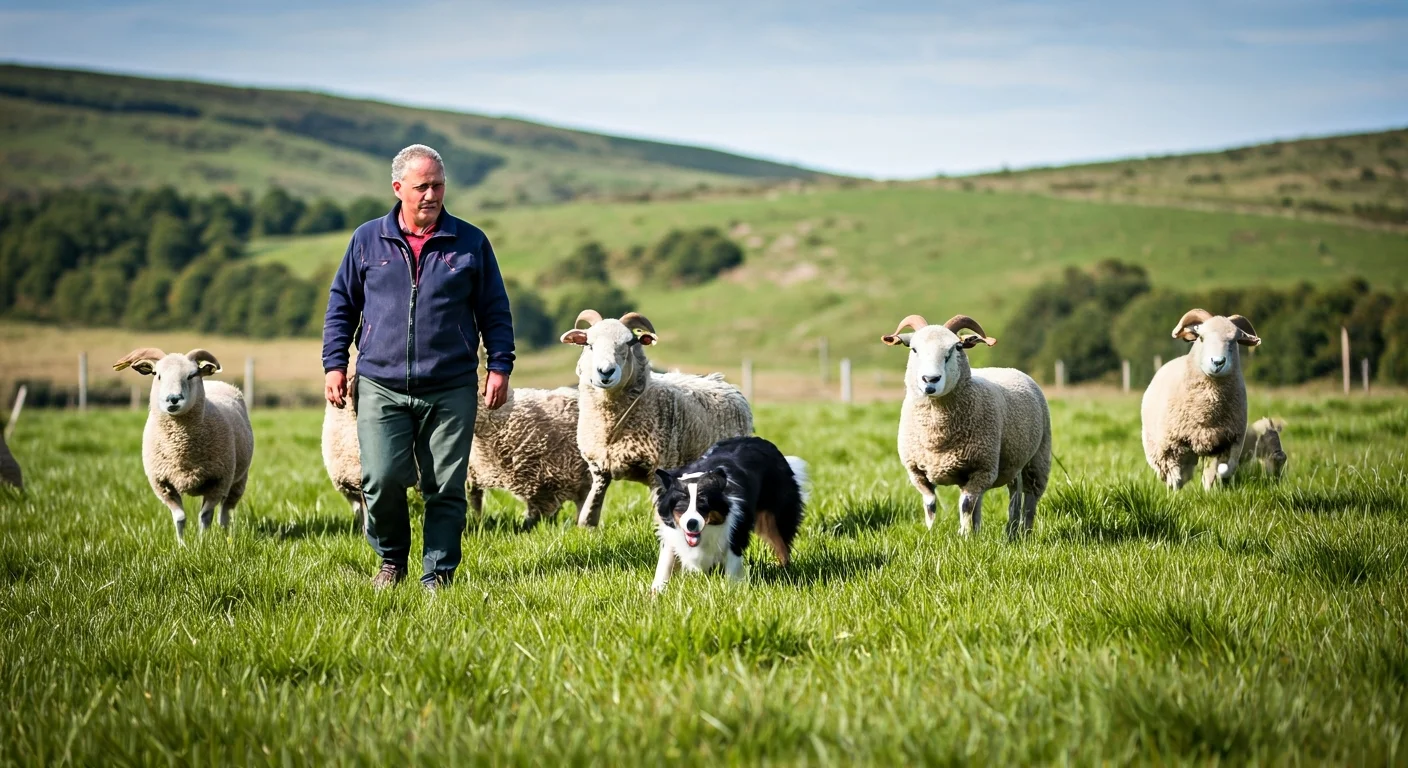
When sheepdog trials moved to America, primarily through the immigration of British shepherds in the late nineteenth and early twentieth centuries, the format adapted to different conditions. American trial fields are typically flat or gently rolling rather than the steep hill terrain of British competition. The sheep used are different breeds with different characteristics. The farming culture from which handlers come is different.
These adaptations produced the USBCHA format that governs American Open competition. It is recognizably related to the British model but tailored to American conditions and context. The core elements, outrun, lift, fetch, drive, pen, shed, remain consistent. The distances, the terrain, and the stock reflect American context.
This adaptation process involved genuine creative work by early American trial organizers who understood what the British format was testing and worked out how to test the same capabilities under different conditions. The result is a competitive format with its own integrity that serves American trial culture well without being a mere copy of what Britain developed.
British Bloodlines in American Dogs
Walk through the pedigrees of the Border Collies currently winning USBCHA finals and you will find British dogs, or their recent descendants, throughout. American breeders have imported British-bred dogs for decades, both because of the quality of individual animals and because importing from the deep British gene pool introduces genetic variation that strengthens American breeding programs.
The names that recur in elite American pedigrees often originate at ISDS trials or from ISDS-certified working farms. Handlers who track these bloodlines can trace a direct line from current American competitors back to ISDS Supreme champions of two or three decades ago.
This genetic connection means that American herding trial culture and British herding trial culture remain intertwined in ways that go beyond shared format. The dogs are literally related.
Scottish Versus Welsh Versus English Styles
Within the British tradition, regional style differences are recognized and debated by knowledgeable observers. Scottish dogs are sometimes described as working harder and farther, reflecting the extensive hill country of the Borders and Highlands. Welsh dogs are associated with precise, close work suited to the steep valleys and small fields of Welsh hill farms. English dogs reflect the more varied terrain of Northern England with what some describe as a middle style between Scottish and Welsh characteristics.
These generalizations are heavily contested by handlers from each tradition, and significant variation exists within each country. But the regional style conversation reflects a genuine phenomenon: the conditions in which dogs are developed shape the working style they express, and different regions produced different conditions.
At the International, judges evaluate work against a standard that encompasses all three styles. This creates interesting dynamics where judges from different regions may weigh certain qualities differently, and where the composition of the judging panel affects which runs score highest.
The New Zealand and Australian Factor
The international sheepdog trial world extends beyond Britain and America. New Zealand and Australia have strong trial traditions built around their own sheep farming cultures and their own bred-in-country dogs.
The Huntaway, developed in New Zealand for driving large flocks across extensive terrain using voice rather than eye, represents a working style that British trial formats do not accommodate. The Kelpie, which I discussed in the context of non-Border Collie breeds competing in American trials, is primarily an Australian development suited to Australian conditions.
International competition that brings these traditions together reveals that the “correct” way to herd sheep is more varied than any single trial format suggests. The British-derived format, which dominates American and European competition, tests a particular cluster of skills superbly. It does not test all valuable herding skills. The working traditions that developed in Australia and New Zealand test other capabilities that the British format largely ignores.
This diversity of tradition is worth celebrating rather than collapsing into a single standard. Different farming environments genuinely require different dog capabilities, and the trial formats that emerged from those environments reflect real practical demands.
What American Handlers Can Learn From the British Tradition
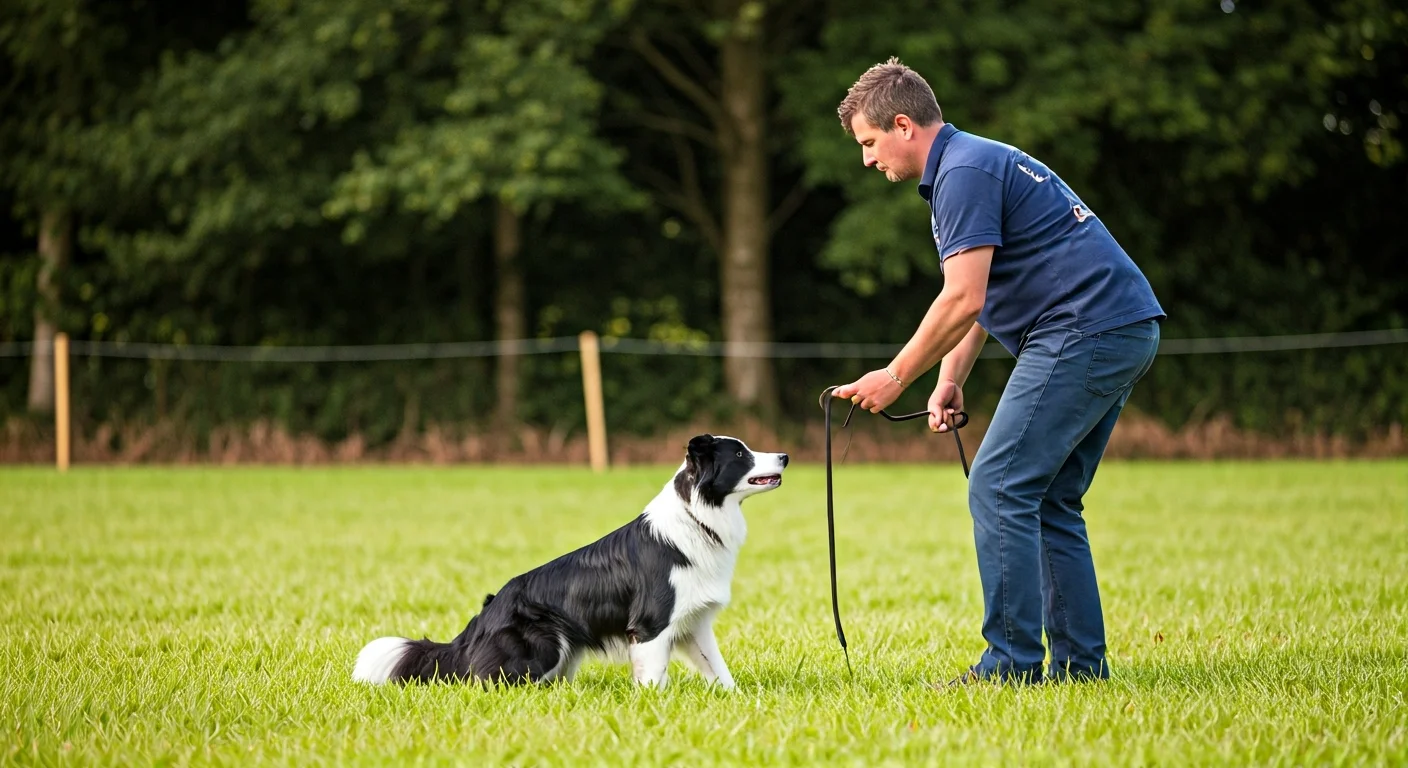
The practical lessons that American trial handlers can draw from studying the British tradition are not primarily about copying British training methods. They are about taking the context seriously.
The British handlers who consistently produce the best trial dogs are embedded in working contexts where the dogs’ skills are tested by practical necessity continuously. American handlers who want to approach this standard need more stock access, more varied stock, and a more continuous relationship between their dogs’ development and real working conditions.
The road to national competition in America runs through accumulated experience and consistent access to quality stock. The British tradition provides a model for what sustained, practical embedding in working conditions produces, even if the specific agricultural contexts differ.
The Ongoing Dialogue
The relationship between British and American herding trial culture is not a one-way transmission. American handlers have contributed innovations in training methodology and course design that have influenced how the sport is thought about globally. The American trial community’s approach to class structure and regional qualification has aspects that British organizers have studied with interest.
The sport grows most healthily when these traditions remain in genuine dialogue. The Supreme Championship will likely continue to be won by British or Irish handlers for the foreseeable future. But the American Open circuit develops working dogs of genuine quality that carry the British tradition forward in an American context.
That carrying forward is itself a contribution. The sport the Welsh hill farmers started in 1873 is alive, growing, and developing in ways they could not have anticipated. The dialogue between its home and its diaspora is part of how it stays vital.