The Animal Changes Everything
Walk into a sheep trial and you are watching a particular sport. Walk into a cattle trial and you are watching a different one, with different demands, different risks, and different skills on display. Walk into a duck trial and you are watching something else entirely, which some experienced sheepdog handlers refuse to take seriously and others find genuinely interesting.
The livestock used in herding trials determines virtually everything about what the competition requires. The dog’s instinct, the handler’s strategy, the judge’s criteria, the training methods that work, the breeds that succeed: all of these shift when the stock changes. Understanding how and why gives a more complete picture of what herding work actually involves.
I have watched dogs that were genuinely competitive with sheep struggle badly with cattle. I have watched dogs that worked cattle powerfully look tentative and uncertain when presented with sheep. The skills overlap but do not transfer automatically. Stock sense, the ability to read an animal’s movement and intent, must be developed separately for each species because each species behaves differently.
Sheep: The Gold Standard
Sheep dominate competitive herding for reasons that go beyond tradition. Sheep are practical to manage in large numbers. They are mobile enough to create interesting competition courses. They are light enough that a dog cannot work too physically without consequences becoming obvious to a judge. They reveal a dog’s finesse in ways that heavier stock do not.
The sheep’s flight response is sensitive and graduated. A dog that works too close creates obvious distress and loses points. A dog that works too far back loses control and loses points. The narrow band of ideal working distance that sheep require forces dogs and handlers to develop precision that becomes the benchmark for the sport.
Sheep at different life stages also present different challenges. Ewes with lambs are protective and unpredictable. Wethers are typically calmer and more manageable. Year-old lambs can be light and flighty. Understanding these distinctions helps handlers assess what they are facing before the run begins.
The connection between sheep psychology and trial success is deep enough that serious competitors study it systematically. Knowing how sheep behavior shapes trial outcomes is as important as knowing how your dog should move on a given phase of the course. The sheep are active participants, not passive objects being moved from point A to point B.
Cattle: A Different Language
Cattle trials test different things. Where sheep work rewards finesse and distance control, cattle work rewards power and nerve. A dog that cannot handle the physical and psychological pressure of facing a cow that has decided not to move will not survive cattle competition.
The National Stock Dog Association sanctions cattle trials in several formats. Course work with cattle looks superficially similar to sheep work: dogs must move stock through obstacles toward a goal. But the mechanics are profoundly different.
Size differential: A cow outweighs a Border Collie by a factor of fifteen or more. Dogs cannot rely on physical intimidation the way they can with sheep. They must work on instinct and authority, using eye, positioning, and speed to control animals that could easily injure or kill them.
Speed of response: Cattle move more deliberately than sheep. A sheep that decides to bolt does so instantly. A cow’s decision-making process is slower but, once committed, the follow-through is much more powerful. Dogs must read cattle earlier to intervene before commitment.
Heel work: Many cattle dogs work by nipping at heels to move cattle that resist pressure. This technique, which would destroy a sheep trial run, is integral to cattle work. The Australian Cattle Dog and Australian Kelpie, both developed for cattle work, exhibit this behavior naturally in ways that Border Collies typically do not.
Kicking risk: Cattle kick, and they kick with enough force to injure or kill a dog. Dogs working cattle must understand safe approach angles and know when to back off from a defensive animal. Dogs without this judgment get hurt. This is not metaphor. I have seen cattle trial dogs take blows that put them on the ground.
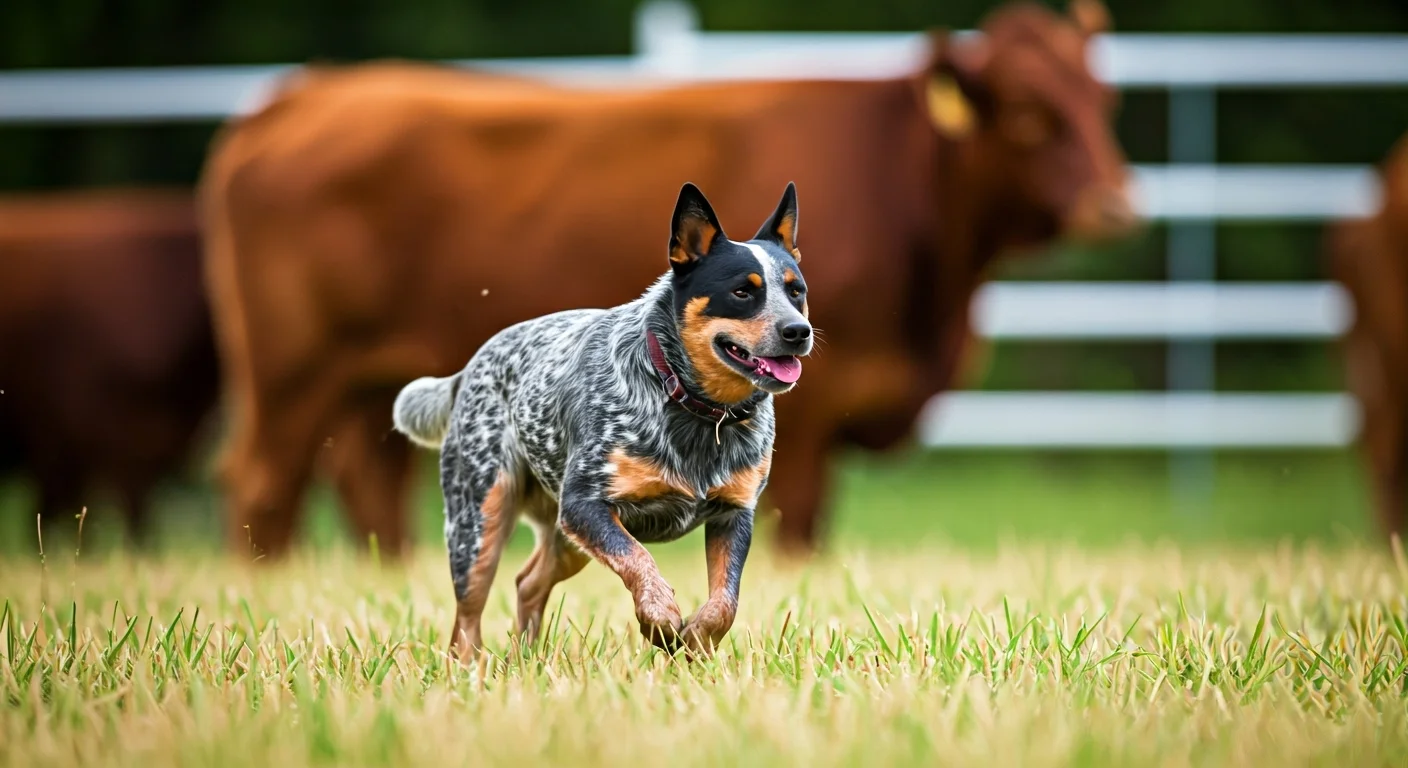
For the breeds that compete in different livestock trial formats, the species of stock worked matters significantly. The ACD and Kelpie that struggle at sheep work distances find their natural context in cattle competition. The breed fit question changes entirely depending on what livestock the trial involves.
Duck Trials: Precision at Small Scale
Duck trials are the newest addition to competitive herding and the most controversial. The format uses ducks in place of sheep, with dogs moving small flocks through obstacle courses on compact fields.
The case for duck trials is practical: ducks are accessible. Someone with a suburban-adjacent property can keep a small flock of ducks where keeping sheep is impossible. Duck trials make herding competition available to handlers who cannot access sheep training regularly. They also allow instinct testing and introductory competition for puppies and beginning handlers at reduced cost and logistical complexity.
The case against duck trials is that they test something different from sheep work in ways that do not necessarily translate. Ducks move in compact, tight formations. They do not have the same flight zone dynamics as sheep. The course distances are short enough that handler pressure affects the work in ways that Open sheep courses minimize.
The herding trial community’s attitude toward duck work ranges from enthusiastic support among those who see it as democratizing the sport to dismissive skepticism from handlers who view it as a dilution of what herding competition should represent.
My own view is that duck trials serve a legitimate introductory function and should not be held to the same evaluative standard as sheep work. A dog that excels at duck trials may or may not have the instinct and skills for sheep work. The two activities are related but distinct, and pretending otherwise serves neither well.
Cattle Dog Trials: The Ranch Reality
Beyond the organized trial circuit, cattle dog trials represent working herding in its most practical form. The skills tested, moving cattle through working chutes, sorting specific animals from a herd, penning cattle in ranch scenarios, reflect actual ranching tasks in ways that aesthetic sheep trials do not.
Cattle dog trials attract a different demographic than sheep trials. The working ranch community that relies on stock dogs daily approaches competition with a utilitarian perspective: the trial should test whether the dog can do the real job, not whether it can perform a stylized course that approximates real work.
This perspective sometimes creates friction with the show-circuit sheepdog world, which has developed aesthetic standards and judging criteria that prioritize elegance alongside effectiveness. Ranch-oriented cattle dog people are sometimes dismissive of this aesthetic dimension. Sheepdog people sometimes look down at cattle trials as less refined.
Both perspectives contain partial truth. The sheep trial format has developed into a sophisticated test of working ability that also happens to be beautiful to watch. Cattle trials test raw working capability in realistic scenarios. Neither excludes the value of the other.
Working Through Multiple Species
Some of the most versatile working dogs I have encountered in seventeen years of covering this sport can work multiple species competently. The learning process for each species builds stock sense that transfers, not perfectly, but meaningfully. A dog that has genuinely learned to read sheep has developed pattern recognition about prey animal behavior that helps with ducks and partially helps with cattle.
Training through multiple species is one strategy that advanced handlers use to develop more complete stock dogs. The dog that has worked sheep, cattle, and goats understands that different animals require different approaches. This flexibility becomes useful when trial conditions present unusual stock, when training in one species is temporarily unavailable, or simply when the handler wants a more complete working dog.
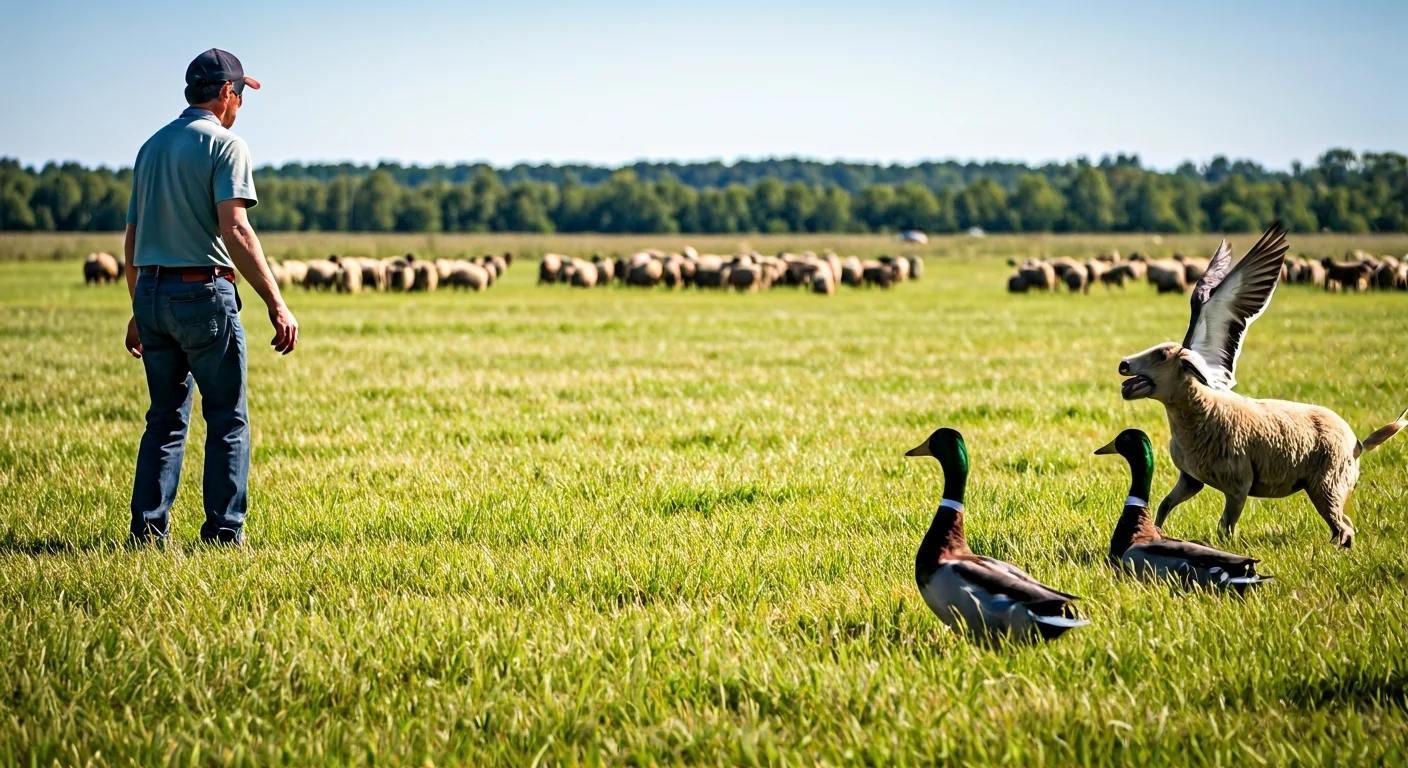
The way handlers structure deliberate cross-species training reflects broader principles about how champions develop their dogs’ skills between competitions. Variety in training scenarios, including variety in the animals the dog encounters, builds the adaptive capability that narrow specialization does not.
Goats: The Underappreciated Challenge
Between ducks and cattle in terms of competitive profile, goats rarely get discussed in herding trial coverage but deserve mention. Goat trials exist, primarily through 4-H programs and some regional working dog organizations, and they present challenges that neither sheep nor cattle present.
Goats are curious rather than flighty. They do not have the same consistent flight response as sheep. They investigate threats rather than fleeing them, which means the pressure-and-response model that sheep work teaches does not always apply. Dogs that work goats must learn to manage animals that sometimes turn and face them, a response that can confuse dogs trained exclusively on sheep.
Goats are also athletic in ways sheep are not. They climb, jump, and squeeze through spaces that sheep cannot access. A loose goat on a trial field is a more significant management problem than a loose sheep. Handlers who work goats develop a set of stock management skills that are genuinely useful even if they do not directly translate to sheep trial scoring.
What Each Species Teaches
If I were designing a training program to produce a maximally versatile herding dog, it would involve all four species in deliberate sequence. I would start with sheep, because they develop the finesse and distance work that is hardest to develop on more forgiving stock. Then cattle, to develop power and nerve where sheep work may have produced over-caution. Then ducks, to practice precision on a small scale that rewards accurate command timing in ways that sheep trials of necessity cannot. Then goats, to develop adaptability to atypical stock responses.
Most handlers do not have access to all four species regularly. But the principle holds even at smaller scale: variety in the animals a dog encounters develops the broader pattern recognition that distinguishes a genuinely capable working dog from one that is good at a particular test on particular stock.
The trial results that matter most, at whatever level you are competing, come from understanding how judges evaluate the work across different phases and scenarios. Each livestock type tests those phases differently, and the best handlers understand which demands each species places on the dog’s skill set.
The animal changes everything. The underlying principles remain the same.