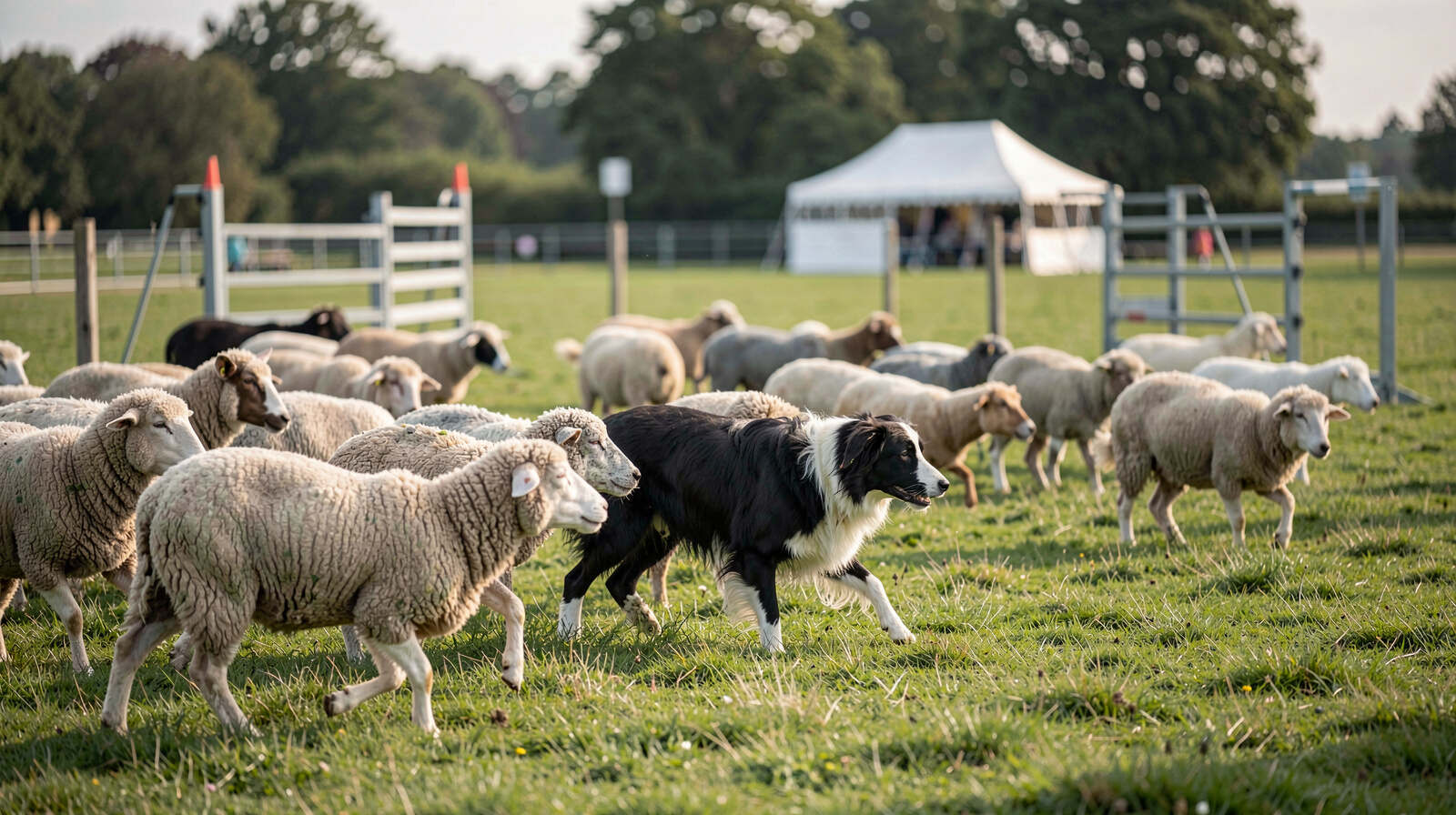
An Australian shepherd needs a job, a routine and a way to switch off, and the owner supplies all three. Drive is the breed’s engine: the urge to move, chase, herd and work. Energy is what that engine burns. Managing both means giving the dog daily physical work, mental work and clear rules, then teaching it that nothing is happening right now. Without that balance, the same dog that shines in a sport will pace the hallway at night.
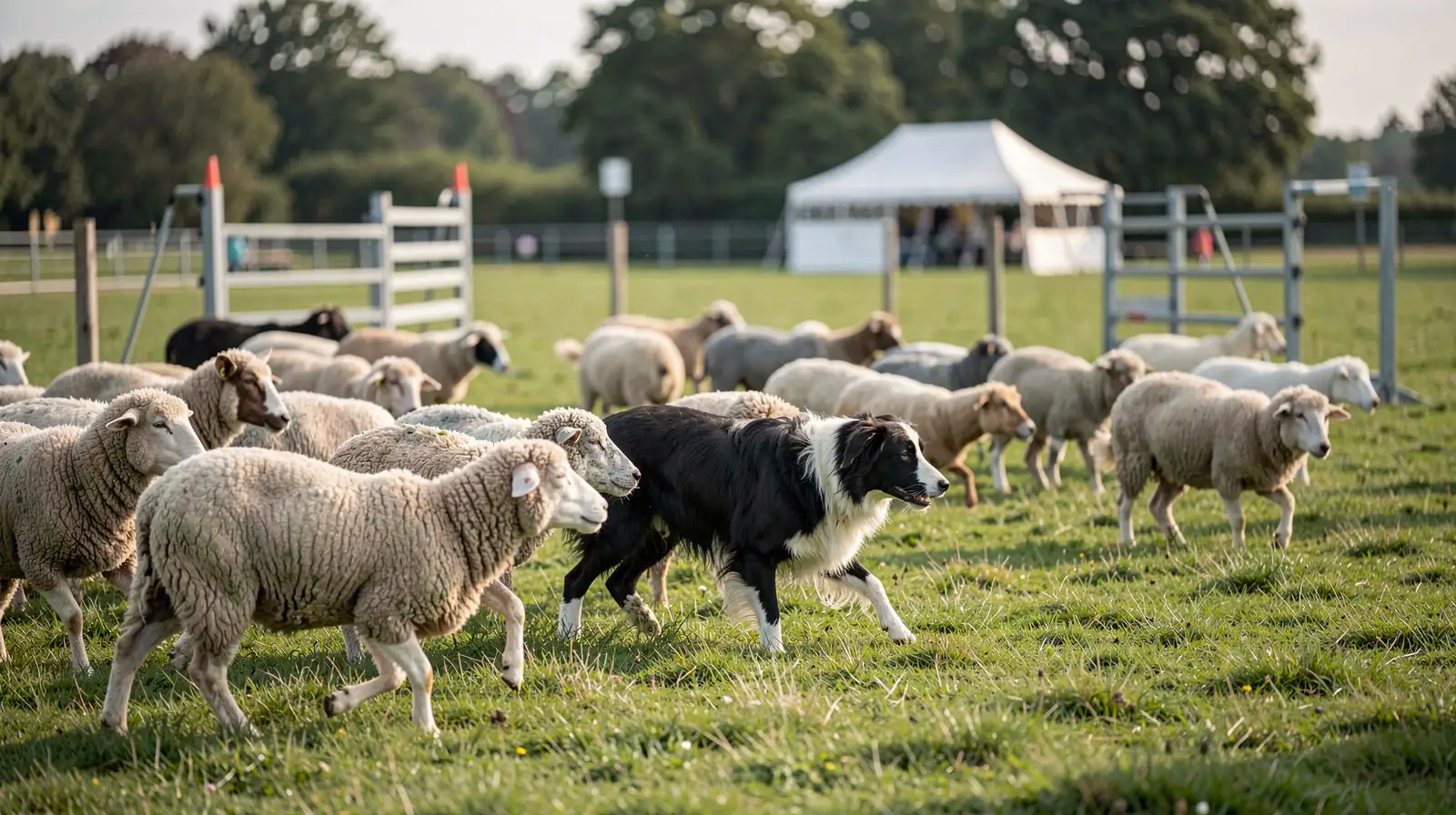
What does drive look like at home, on a walk and with visitors?
At home, drive shows up as shadowing, staring at the fridge, dropping a ball on your keyboard or circling the kitchen island. These are not accidents. They are the dog asking for a task. The fix is structure rather than more freedom: a place command, a mat or bed where the dog goes and stays while the household moves around it, and short training breaks instead of one long session. Ten minutes of focused work twice a day tires a working breed more than an hour of loose running.
On a walk, drive turns into pulling, scanning the horizon and reacting to bikes, joggers or livestock. A walk is not a substitute for work, but it can carry work. Ask for a sit at every curb, a down while a car passes, a recall before the dog reaches the end of the line. A long line on a quiet field lets the dog move without rehearsing the pull. If sheep are visible, keep distance: chasing stock is self-rewarding and one repetition can undo months of training.
With visitors, the problem is usually the door and the first two minutes. A dog with high drive wants to greet, jump, herd the guests into the living room and hold them there. Decide the routine before the bell rings. The dog goes to its mat, the guests enter, and the dog is released only when it is calm. Owners who live with this breed in a flat often keep a house line on the dog during visits, not as punishment but as a brake. For a French-language record of daily life with the breed, including settling work and flat living, see living with an Australian shepherd, written by a breeder in southern France.
Which sports channel the drive best?
Agility and canicross are the two most accessible outlets, and they ask for different things. Agility is stop and start: the dog learns to read the handler’s body, to wait at the start line and to hit contacts. It rewards control as much as speed, which is why it suits dogs that already have a stay. Canicross is straight-line work: the dog pulls in a harness while the runner follows, and the pull that is a nuisance on a walk becomes the point of the sport. Start with short distances on soft ground and build slowly, because a young dog’s growth plates are still open.
Other options include treibball, which uses a large ball instead of livestock, and formal herding lessons on sheep or ducks. Herding is the breed’s original job and the strongest outlet of all, but it needs a trainer, stock and a dog with enough obedience to be stopped. Whatever the sport, keep one rule: the dog works for you, not for the equipment. A dog that only settles when a ball is present has learned the wrong lesson.
How do you teach a dog to settle?
Settling is a trained behaviour, not a personality trait. It is built by rewarding the dog for doing nothing while the world stays boring. Put a mat down, send the dog to it, feed calmly, and end the session before the dog gets up. Repeat in the kitchen, then the living room, then a cafe terrace. Duration grows on its own if the reward arrives while the dog is still lying down.
Three habits help. First, separate work time from rest time with a clear cue, such as a harness for sport and a collar for the house. Second, cap the day: two real sessions plus walks beat five unstructured hours. Third, protect sleep. An adult Australian shepherd sleeps around twelve to fourteen hours a day, and a tired dog that never sleeps becomes a wired dog. If the dog paces at ten in the evening, the answer is usually more structure in the afternoon, not another walk.
What happens in the first week at home, and what is the dog’s place around children?
The first week is about boredom and boundaries. Set up one room, one bed, one water bowl and a fixed feeding schedule. Do not invite the whole family on day one. Take the puppy out every hour or two, reward elimination outside, and ignore accidents inside. Keep sessions to five minutes and stop while the puppy still wants more. Crying at night is normal for two or three nights; a crate or pen next to the bed shortens it.
Around children, the rules belong to the adults. The dog needs a bed that children cannot enter, and children need to learn that a sleeping or eating dog is left alone. Teach the dog to move away rather than to endure: call it out of a hug instead of waiting for a growl. Supervise every interaction with young children, and give the dog a job during family chaos, such as a down stay while dinner is set. A herding breed will try to move running children, so redirect that impulse early with a recall and a toy.
How do you handle the double coat, shedding, bathing and feeding?
The Australian shepherd has a double coat: a soft undercoat that insulates and a longer topcoat that sheds water and dirt. The undercoat is what comes out twice a year in a heavy shed, and it comes out in tufts. Brush two or three times a week with an undercoat rake and a slicker, and daily during the seasonal blow. Work in sections, down to the skin, and stop when the skin reddens. Mats form behind the ears, under the collar and at the trousers, so check those spots first.
Bathing is needed less often than most owners think, roughly every six to ten weeks or when the dog is genuinely dirty. Use a dog shampoo, rinse thoroughly, and dry the undercoat or it will stay damp and smell. Nails, ears and teeth belong in the same weekly routine.
Feeding is simpler than the marketing suggests. Choose a complete food for the dog’s age and size, measure it, and judge the portion by body condition rather than by the bag. You should feel the ribs under a thin layer of fat and see a waist from above. Puppies eat three or four meals a day until about six months, then two. Watch weight, coat and stool, and change one thing at a time.
What should you check before choosing a puppy?
Choose the breeder before the puppy. Ask about health testing of the parents, especially hip and eye screening, and ask to see the mother with her litter. A responsible breeder will show the dogs’ living conditions, explain how the puppies are socialised in the house, and answer questions about temperament. Meet at least one adult dog from the lines if you can. Ask what happens if your situation changes: a breeder who takes the dog back is a breeder who cares where it goes.
At the meeting, look for a puppy that recovers quickly from a small surprise, approaches people without panic and plays with its littermates. Avoid choosing on colour alone. The calmest puppy in the litter is not always the best match for a sport home, and the boldest is not always the best for a flat. Match the puppy to your daily life, not to a photograph.
If the drive and energy of an Australian shepherd feel like a lot, the same working traits show up in other herding breeds, and comparing them side by side can clarify what you are actually managing at home. A kelpie, a blue or red heeler and an Australian terrier each carry a different mix of stamina, biddability and coat demands, and handlers often check those traits before choosing a dog. Our working breed profiles read each breed from the working side and note what that choice costs in daily care.