The Long Road to Meeker
The Meeker Classic in Colorado. The USBCHA National Sheepdog Finals. The Open at the top regional trials. For handlers working their way through the trial circuit, these names carry weight that casual observers cannot fully appreciate. Getting to these events, not as a spectator but as a competitor, is the project of years for most people who manage it at all.
I have covered the national circuit long enough to watch handlers go from their first Started entry to their first National Finals appearance. The trajectory typically spans a decade. Some make it faster. Most take longer. A few spend entire competitive careers without earning a spot at the top level, not for lack of effort but because the competition is genuinely that deep.
Understanding how qualification works, and what competitors face when they arrive, gives both aspiring handlers and spectators a framework for appreciating what they are watching.
The USBCHA Structure
The United States Border Collie Handlers Association (USBCHA) governs the premier level of sheepdog trials in America. Their sanctioned events follow consistent rules regarding course design, sheep requirements, judging standards, and handler conduct. Winning at a USBCHA-sanctioned trial is the currency that opens doors further up the circuit.
USBCHA trials are divided by class. Open is the top class, requiring dogs and handlers to demonstrate the full range of skills the sport tests: long outruns, precise fetches, multi-leg drives, penning, and shedding. Below Open sit Nursery (for younger dogs), Pro-Novice, Novice, and Started, with each class progressively reducing the course complexity and distance requirements.
For most handlers, the path to national competition runs through Open qualification. Before you can enter a national event, you need to establish yourself at Open level within your region. This means entering regional trials, accumulating experience, and eventually placing well enough that your name appears on the lists of handlers who have demonstrated the capability to compete at a higher level.
Understanding how the class system progresses is essential for anyone planning their route from Started entries to the national stage.
Regional Qualification Pathways
USBCHA organizes the country into geographic regions, each with its own circuit of sanctioned trials and its own pathway to regional championships. Qualification for national events typically flows through regional performance.
The specific mechanics change somewhat from year to year as USBCHA updates its rules, but the general structure holds. Handlers accumulate qualification points or placements at regional sanctioned trials. Those with sufficient performance earn invitations to regional championships. Champions and high finishers at regional championships then qualify for national events.
The regional system matters because it creates competitive tiers that reflect genuine differences in the depth of competition across the country. Regions with large herding communities, the Pacific Northwest, the Mountain West, and parts of the Southeast, produce more and better Open handlers. Qualifying out of these regions requires outperforming a deeper field than qualifying from regions with fewer sanctioned trials.
This sometimes creates controversy. A handler who wins a regional championship in a less competitive area enters national finals alongside handlers who placed third or fourth in a much deeper regional pool. The system acknowledges this imperfectly. What it does is ensure that national finals is not geographically concentrated, which has value for the sport’s development in areas where herding is growing.
The Nursery Program
Alongside the Open qualification track, the Nursery program creates a dedicated pathway for younger dogs. Nursery dogs are typically three years and under, competing on reduced courses that test core skills without demanding the full Open course complexity.
The Nursery finals is a prestigious event in its own right, and many of the Border Collies who go on to become dominant Open dogs first came to attention through Nursery performance. Handlers use the Nursery program strategically, running promising young dogs in an environment that builds experience and confidence without the exposure to full-course pressure before the dog is ready.
I have watched handlers deliberately hold back young dogs that were physically capable of Open work because they wanted to develop the dog’s mental composure through Nursery competition first. This patience typically pays dividends. Dogs that are pushed to Open level before they have the experience to handle its demands sometimes develop anxiety or avoidance behaviors that are difficult to correct later.
The training philosophy that successful handlers apply between competitions typically includes this kind of careful, long-horizon thinking about when to advance a dog rather than rushing the timeline.
What National Finals Actually Looks Like
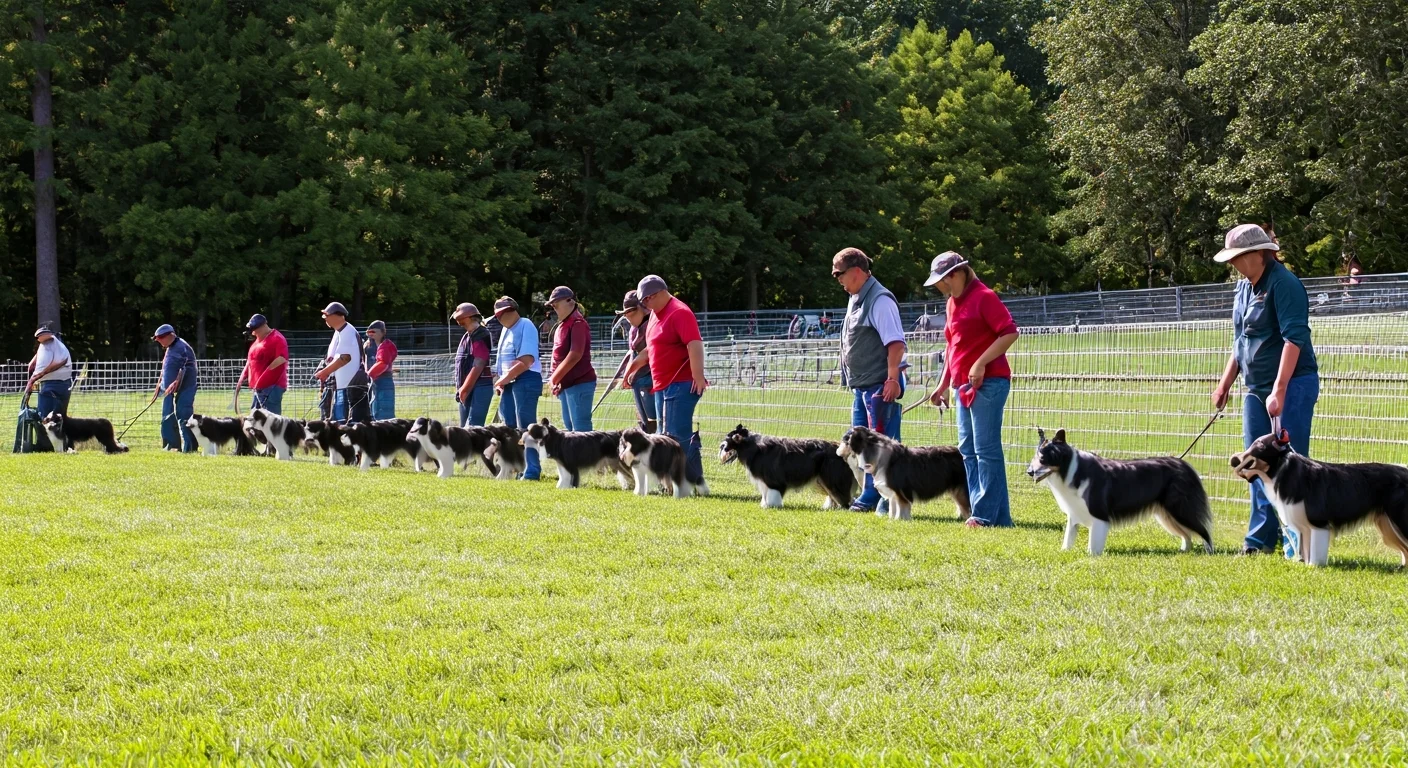
The USBCHA National Sheepdog Finals rotates among host sites, with different ranches and regions bidding to host the event. The course conditions, terrain, and sheep vary significantly by location. This variability is intentional. A true test of herding ability should not be site-specific. Dogs and handlers that can adapt to new terrain, new stock, and new course configurations demonstrate something more valuable than mastery of a single venue.
Entries at the National Finals come from across the country. The field includes some of the best handlers and dogs in North America, along with handlers who qualified with legitimate credentials but face a significant jump in competitive level. The range of skill on display across a full National Finals field is instructive.
At the top, runs are exhibitions of precision that barely look like work at all. Sheep move smoothly through every obstacle. Commands come rarely, because the dog is reading the situation correctly and doesn’t need much direction. The score reflects not what went wrong but the sum of tiny inefficiencies that the judge noticed even though the spectators did not.
Further down the field, the same course reveals its difficulty. Dogs that were competitive at regional level encounter sheep they cannot read or manage. Handlers make decisions that work at regional distances but fail at the expanded Open Finals course. The jump in course size from many regional trials to the National Finals course is significant, and not every dog and handler make the adjustment.
The Meeker Classic
Among the events that serve as qualifiers and as prestigious competitions in their own right, the Meeker Classic in Meeker, Colorado holds a special place in American sheepdog trial culture.
Meeker has been held annually for decades, typically in September on the high-altitude ranches outside town. The elevation, terrain, and sheep type create conditions that favor particular styles of handling and dog work. Cattle-country sheep, heavy and accustomed to large spaces, require different management than the lighter sheep common in other regions.
Many handlers treat a Meeker entry as a barometer for their Open development. Finishing with a completed course at Meeker, even mid-pack, demonstrates something that finishing higher at a smaller regional trial does not. The course demands are real, the field is deep, and the conditions test adaptability.
I have watched many Meeker runs where dogs that dominated their home region encountered the expanded scale of the Meeker course and revealed limitations that regional competition had not exposed. I have also watched handlers who were unheralded nationally put up runs at Meeker that earned genuine respect from the best handlers watching. The course has a way of revealing the truth.
Understanding how scoring and judging work at the top level helps spectators at events like Meeker appreciate why certain runs earn the scores they do, and why the differences between high-placing runs are often invisible to inexperienced eyes.
The International Dimension
American herding trial culture exists within an international context that affects how domestic handlers think about the sport. The International Supreme Championship in Britain, considered by many to be the most prestigious sheepdog trial in the world, attracts entries from across the British Isles and Europe. American handlers who aspire to compete internationally must develop their dogs to compete against the descendants of the same lines that shaped the American trial scene.
Some American handlers have entered international events and performed credibly. None have won. The gap reflects the depth of the British trial tradition, where trial culture is older, more embedded in farming communities, and produces a continuous pipeline of highly skilled handlers and dogs.
This international context motivates some American handlers to pursue a training and development approach that explicitly models what the best British handlers do, with particular attention to the early development and stock exposure that Britain’s working farm culture naturally provides. For handlers without access to sheep for regular training, replicating this environment requires deliberate effort and creative resource use.
First-Generation National Qualifiers
Among the most compelling stories in the national circuit are the handlers who qualify for national finals for the first time after years of effort. These are not prodigies who burst onto the scene at twenty-two. They are typically people in their forties or fifties who began the sport at middle age, spent years developing both their dog handling skills and their sheep-reading ability, and finally assembled everything into a run good enough to earn a qualification.
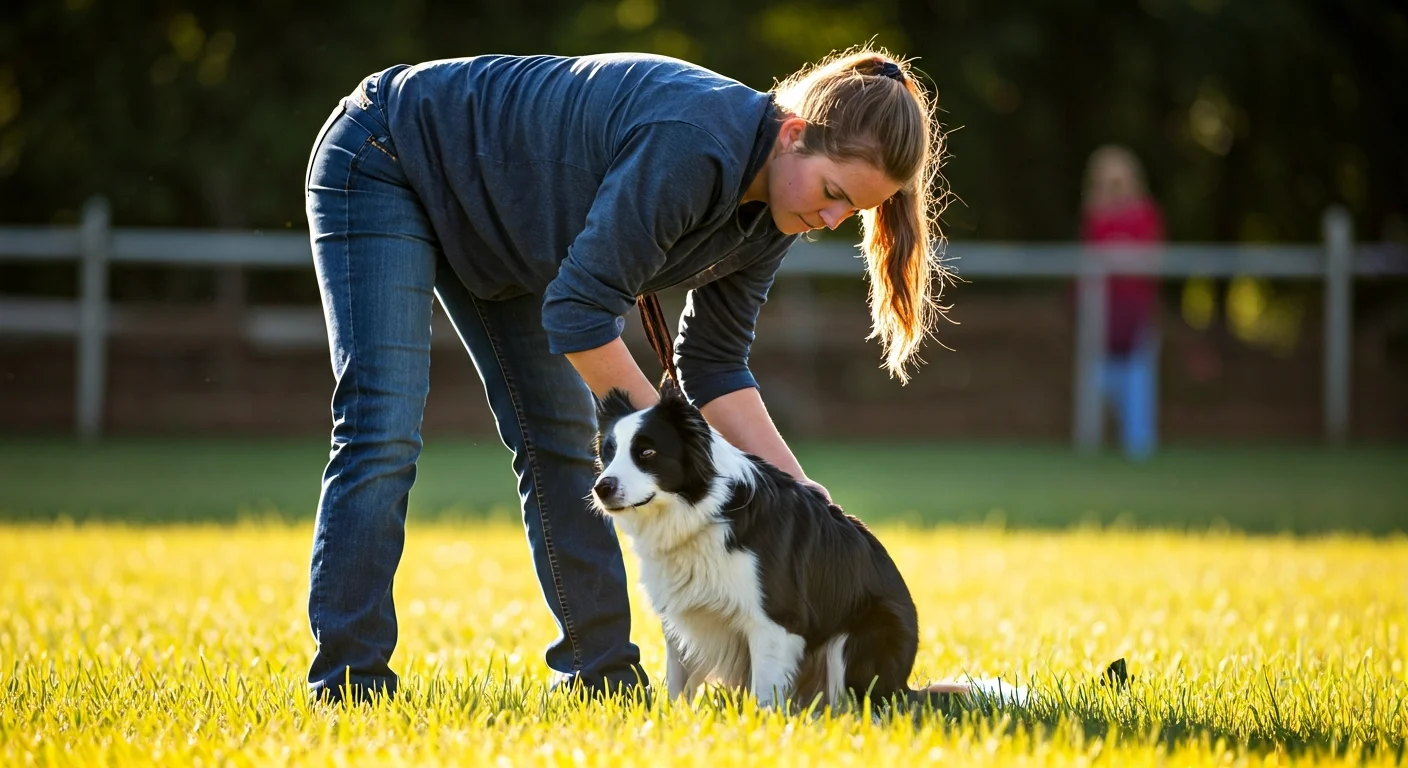
I interviewed a handler at her first National Finals appearance who had been competing for eleven years before qualifying. She had run fifteen Open trials in the previous year alone, paying entry fees, traveling hundreds of miles, and continuing to train even when results were discouraging.
“There were three years in the middle where I wondered if I was just never going to be good enough,” she told me. “I thought about quitting probably four times. What stopped me was that I genuinely love working my dogs. The trial results matter, but they are not the whole reason I do this.”
Her qualification run came at a regional trial she had entered eight times without placing. The ninth time, everything worked. The dog was on, the sheep were manageable, and her whistle timing was precise enough to keep the run clean through all five scoring phases. She finished third in a field of forty-two Open entries.
Her story reflects something the national results tables obscure: the level of sustained effort and genuine passion that the trial circuit demands from everyone who takes it seriously.
Planning the Path
For handlers currently at lower levels who are thinking about the national stage, the practical planning looks like this.
Establish yourself at Open by developing a dog with genuine Open-level ability. Not every dog reaches Open, and recognizing the ceiling of a particular dog without abandoning the relationship is a maturity the trial community respects. The breeds and bloodlines that actually compete at the highest level matter significantly when planning for national competition.
Once competing at Open, research the specific qualification criteria for your region. Attend regional events consistently. Build the accumulated experience of competing at distance on large courses so that when the qualification opportunity comes, the course feels familiar rather than overwhelming.
Be patient. The national circuit will still be there next year, and the year after. The handlers who sustain long competitive careers approach qualification as an eventual goal rather than an urgent deadline.
The road to national finals is long. For the handlers who finish it, it is worth the journey.