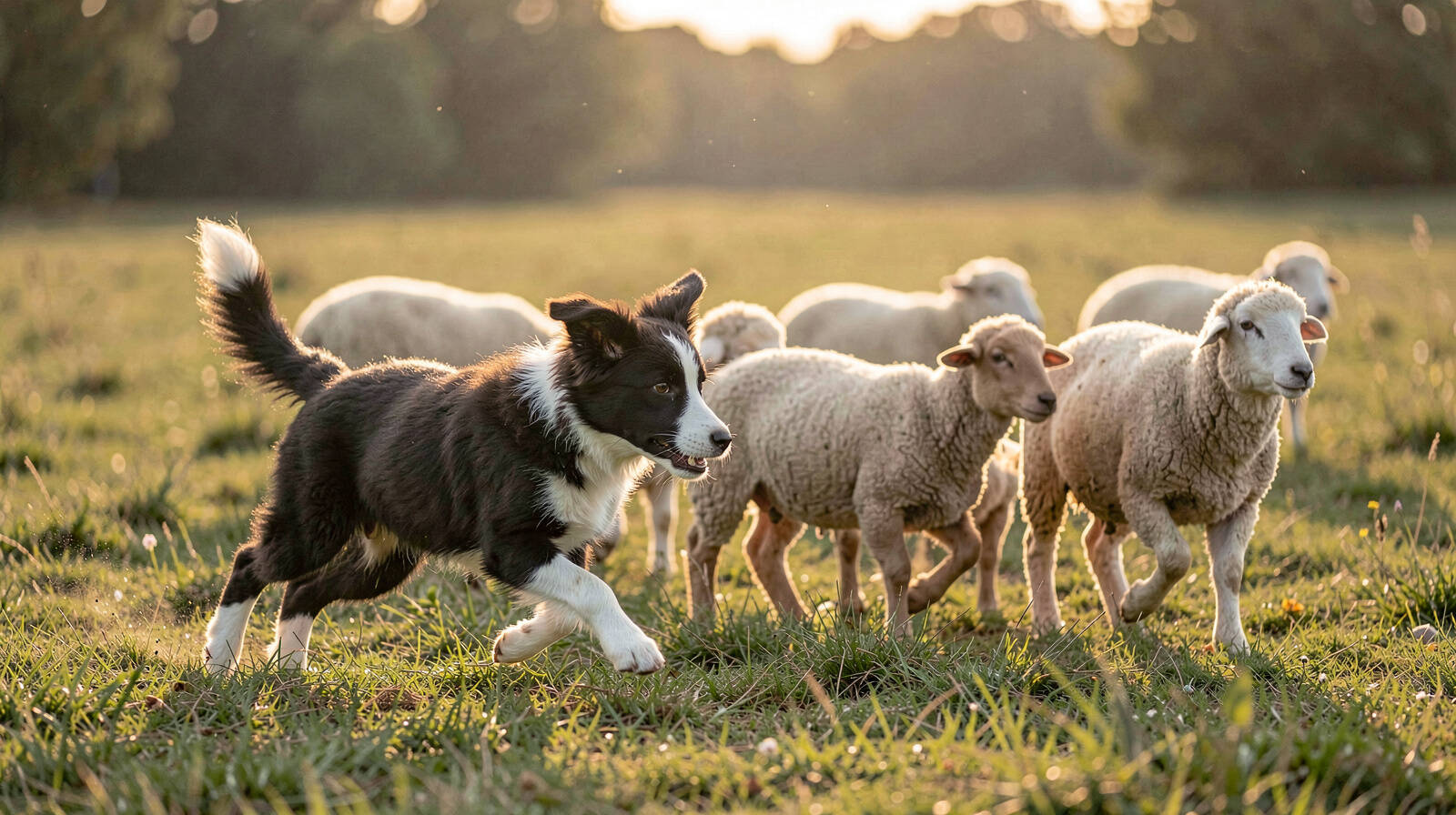
Nursery class is where most future open-class champions first appear in the trial scorebook. The class exists to give young dogs — under three years of age — a chance to run a trial course designed for their experience level, with judging calibrated for a developing partnership rather than a polished one. Understanding how Nursery class works, how it differs from Open and Pro-Novice, and how to prepare a young dog for a successful first season makes the difference between a confidence-building first year and a discouraging one that sets the dog back.
What Nursery Class Actually Is
Nursery class is a competitive class at major sheepdog trial organizations including the United States Border Collie Handlers Association (USBCHA), the International Sheepdog Society (ISDS), and the Australian Working Sheep Dog Association. The common thread across organizations is a class restricted to dogs under a specific age, typically three years old at the start of the nursery season, running a course that is shorter and less demanding than Open but more complex than Pro-Novice or Ranch classes.
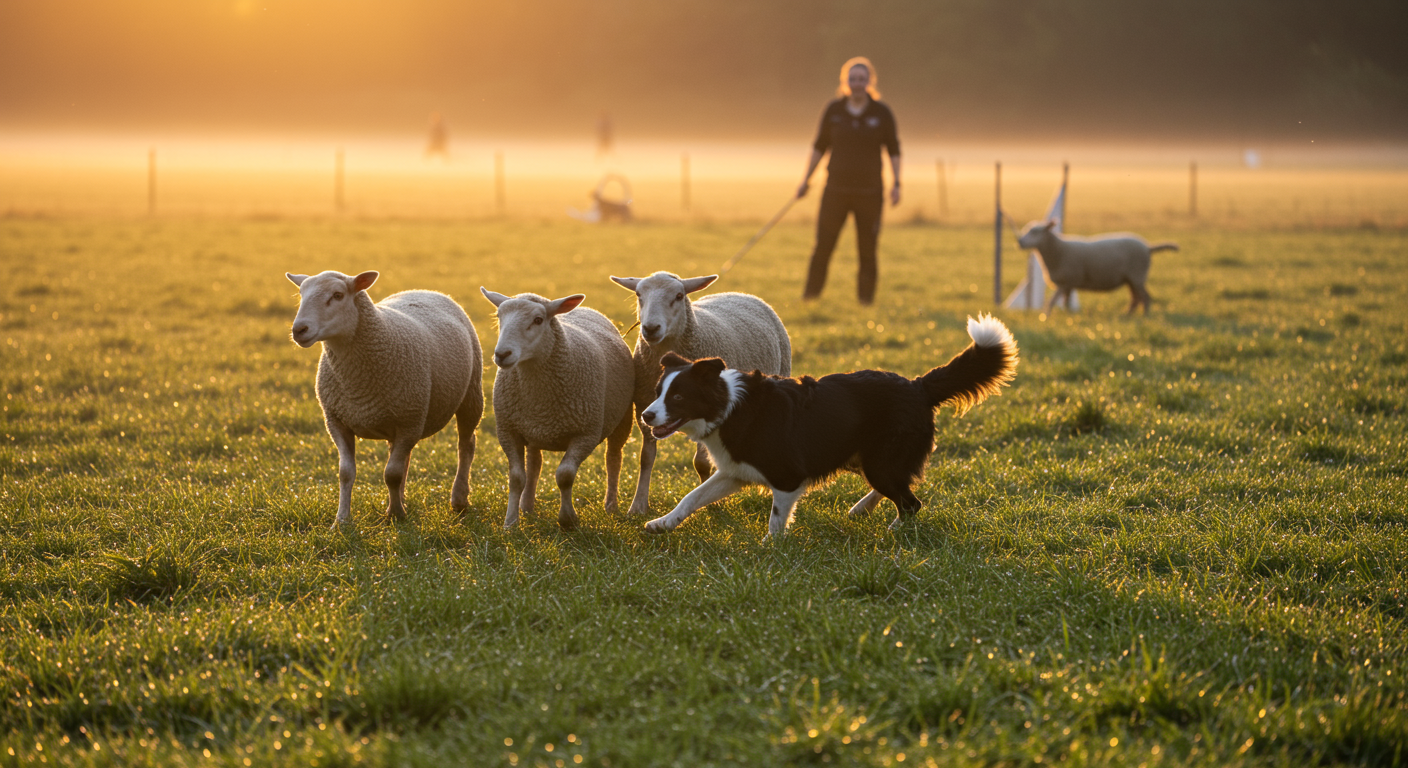
The specific course design varies by organization. A typical USBCHA Nursery course includes a shorter outrun than Open — commonly 200 to 400 yards compared to 400 to 800 yards in Open — a lift, fetch, drive, shed, and pen, judged over roughly 10 to 12 minutes. Time limits are shorter, flock sizes are smaller (typically 5 sheep rather than 20 or more), and the terrain is usually more forgiving.
Age Eligibility Rules
The exact age cutoff depends on the organization. USBCHA Nursery class is open to dogs less than three years old at the start of the nursery year (September 1). ISDS Nursery classes in the UK are open to dogs less than three years old at the start of the trial season. The rules are documented in each organization’s handbook and must be checked annually because cutoff dates occasionally shift.
Several organizations also require that the dog must not have won certain placings in Open class. A dog that has won Open or placed in specific Open championships may be disqualified from Nursery regardless of age. These rules exist to keep the class appropriate for its intended purpose — developing young dogs, not parking established open-class dogs in a less competitive class for easy points.
What Judges Are Looking For
Nursery judging is substantively different from Open judging. Open judges reward polished, economical runs with minimal handler intervention. Nursery judges reward evidence of genuine partnership development and appropriate handling for a developing dog. A Nursery judge will deduct fewer points for a young dog’s occasional lapse in pacing but will deduct heavily for handler over-commanding or for a handler setting up a run that exceeds the dog’s demonstrated ability.
Understanding the judging calibration matters because it affects how handlers should run. In Open, the goal is to minimize point losses on every element. In Nursery, the goal is to show the dog’s growing skill progression within the run while managing the sheep humanely. A run where the dog handles a difficult moment on its own, even if the timing is slightly off, often scores better than a run where the handler rescued the dog from every decision point. Our scoring and what judges look for article covers the broader judging framework.
Preparing a Young Dog for a First Trial Season
Most experienced trialers recommend against entering the first trial until the dog has six to nine months of consistent training on sheep, can outrun cleanly at 150 yards, holds position on the lift, and will drive five sheep for 50 to 100 yards without breaking. Dogs entered before meeting these benchmarks often have a discouraging first trial experience that sets training back.
The specific preparation sequence most handlers use includes: introduction to trial venues through spectating with the dog, exposure to different flocks beyond the home sheep, work on pressure and distance under varied conditions, and at least one “mock trial” in a controlled environment before a formal entry. Our getting started first trial guide covers the full preparation checklist.
Typical Nursery Course Elements
| Element | Nursery Version | Open Version |
|---|---|---|
| Outrun | 200–400 yards | 400–800 yards |
| Lift | Single set of panels | Single set of panels |
| Fetch | Through panels at modest distance | Through panels at longer distance |
| Drive | Shorter drive triangle | Full drive triangle |
| Shed | May be waived or simplified | Required, often with collar or specific sheep |
| Pen | Standard pen | Standard pen |
| Time limit | 10–12 minutes typical | 13–15 minutes typical |
The simplified shed is one of the most important adjustments for young dogs. Shedding is the single hardest element to train. A Nursery course that allows a simplified shed — or in some handler-optional formats, omits the shed entirely — lets a developing dog complete the course without being disqualified for a skill that is still in development.
Nursery Finals and Year-End Qualifications
Most major organizations run Nursery national championships or Nursery finals at the end of the season. USBCHA holds a Nursery Finals event immediately before or during the Open Finals week. Qualification typically requires a dog to accumulate a certain number of points from qualifying trials during the year. Rules for point accumulation, maximum number of qualifying trials, and seeding processes are published each year by the organization.
Qualifying for Nursery Finals is a meaningful achievement that reflects both the dog’s development and the handler-dog partnership. For families new to sheepdog trials, qualifying represents a realistic first-year goal and a concrete way to measure the dog’s progress against peer dogs across the country.
Common Mistakes in Nursery Class
Handlers new to the class make predictable mistakes. Over-commanding is the most common — directing every flank and every pace-change rather than letting the dog make decisions. Running a young dog in sheep and terrain conditions beyond its experience level leads to losses of confidence that linger into later seasons. Entering too many trials in a single year without adequate recovery and training time between events produces a dog that stalls rather than progresses.
The other frequent mistake is running a dog too young. Some handlers enter dogs as early as 18 months because the rules allow it. The written rule does not always match the developmental reality. Dogs that are physically mature but not emotionally ready for trial pressure often have a difficult first season. Waiting an extra six months can transform the experience.
What Nursery Class Tells You About a Dog
A dog’s nursery performance is informative but not predictive. Some dogs who do well in Nursery plateau in Open because the transition to full course demands exposes training gaps. Some dogs who struggle in Nursery excel in Open because they needed more maturity before becoming competitive. The best use of Nursery trials is as a training environment with consequences, not as a final verdict on the dog’s potential.
For handlers evaluating whether their dog has the material to make Open competition, Nursery runs should be interpreted alongside home training, work on unfamiliar sheep, and performance across varying conditions. A single weekend at a Nursery trial is one data point. The full training record is the real evaluation, and it is the basis on which the handler-dog partnership that champions describe is built over years rather than seasons.