What the Sheep Are Telling You
Every run at a herding trial is a three-way conversation. The handler talks to the dog through whistles and voice commands. The dog responds and moves. The sheep react. Most beginners watch the dog. The handlers winning Open finals watch the sheep.
I spent my first three years at trials trying to understand what dogs were doing wrong. A veteran handler finally told me to stop watching the dog and start watching the sheep. The advice felt counterintuitive. The dog was the variable I could control. Why would I watch the sheep?
“Because the sheep tell you what the dog is actually doing wrong,” she said. “The dog’s movement is the cause. Sheep behavior is the effect. Watch the effect.”
That single change in perspective transformed my understanding of the sport more than anything else I had learned.
The Pressure Concept
Sheep move away from pressure and toward comfort. This sounds simple, and it is at the conceptual level. But applying it in real time, across varying terrain and with different stock, requires the kind of deep pattern recognition that only comes from hundreds of hours of observation.
Pressure comes from several sources simultaneously:
Dog pressure: The most obvious source. Where the dog is relative to the sheep, and how intensely the dog presents itself, determines how urgently the sheep want to move and in which direction.
Handler pressure: Handlers standing at the post create a zone the sheep try to avoid, which is why they often push past or around the pen opening rather than into it. Learning to use your own position as a tool, stepping aside to reduce pressure, stepping forward to close off escape routes, is a skill that separates competent handlers from excellent ones.
Terrain pressure: Sheep move toward open ground and away from enclosed spaces. A fence line creates pressure even when nothing animate is near it. Understanding how the course geography influences sheep movement lets you anticipate problems before they develop.
Previous experience pressure: Sheep at trials have been worked before. Some have been penned dozens of times. They know what the pen looks like, and they have opinions about going into it. Understanding sheep behavior and how it influences trial outcomes gives handlers the framework to predict flock reactions before they occur.
Flight Zones and Balance Points
Two concepts from livestock behavior research apply directly to herding trial strategy: the flight zone and the balance point.
The flight zone is the space around an animal that, when entered by a perceived threat, triggers movement. Sheep have flight zones that vary based on individual temperament, past experience, and current stress level. Fresh sheep with little trial experience have large flight zones. Sheep that have been worked repeatedly develop smaller, more predictable zones.
Understanding flight zones tells you how close the dog can approach before triggering panic versus controlled movement. A dog working inside the flight zone consistently will scatter sheep and lose points on every phase. A dog working at the edge of the flight zone produces the smooth, deliberate movement that judges reward.
The balance point is the position from which pressure causes the sheep to move directly away. Stand at a sheep’s balance point and it will move straight ahead. Move off the balance point and it will arc in the direction of your movement.
Experienced handlers use balance points constantly, positioning their dogs to guide sheep through gates without the sheep realizing they are being directed. The sheep think they are moving away from the dog. The handler knows they are moving through the panel. This distinction matters enormously.
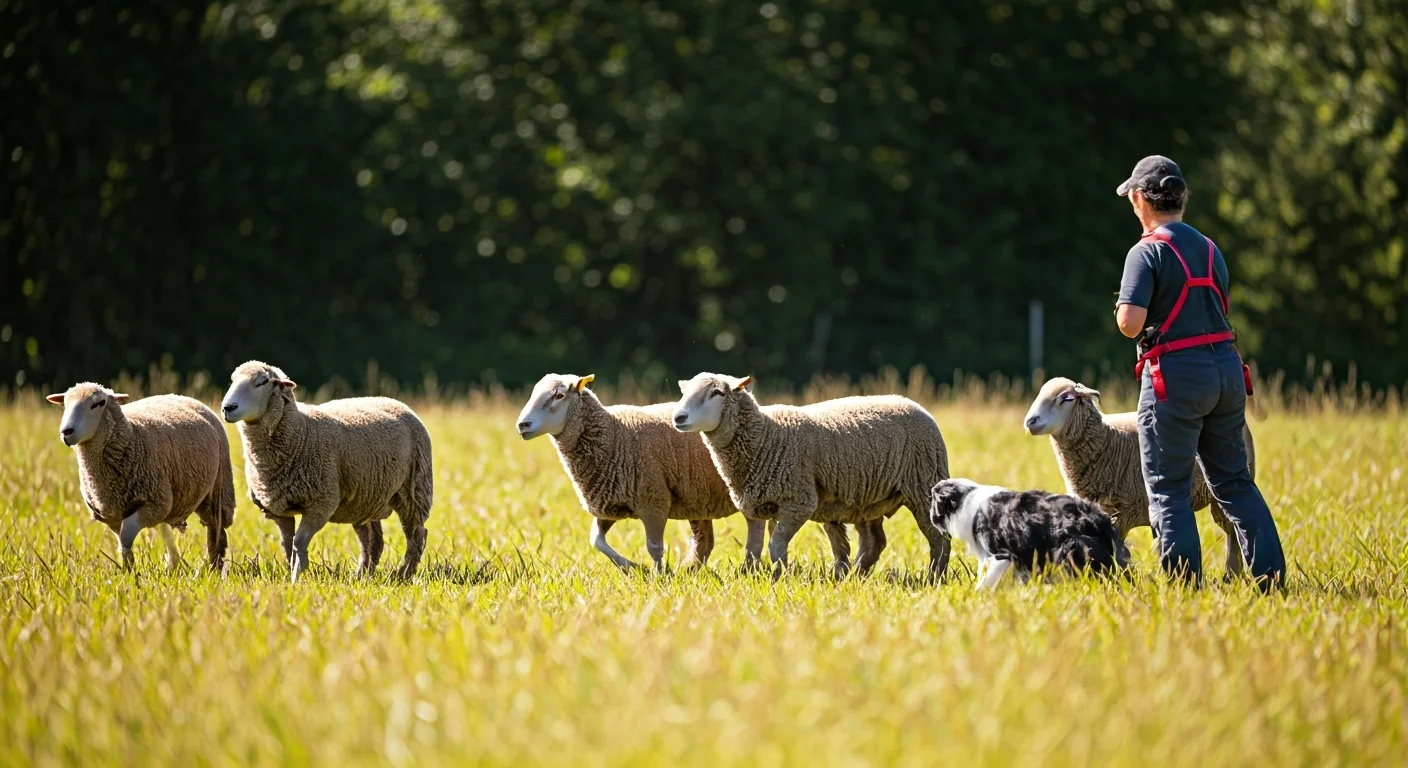
Stock Variation and How It Changes Everything
Not all sheep behave identically, and the trial community knows this. Which sheep breed is used at a trial significantly affects how the course plays out. This is a topic worth more attention than it typically receives.
Light sheep (Suffolk crosses, some Rambouillets) move easily and respond quickly to the dog. They are forgiving in some ways: a dog that is slightly out of position can recover quickly because light sheep adjust fast. But they are unforgiving in others: they bolt when pressured too hard, scatter when a dog cuts in on the outrun, and can panic at the pen in ways that cost time and points.
Heavy sheep (Merinos, Cheviots, some Blackface) require more sustained pressure to move and hold their ground longer under threat. These are the sheep that make weak dogs look weak. A dog without genuine authority will watch heavy sheep simply stop and refuse. Heavy sheep reward dogs with steady, calm pressure and punish dogs that lack either confidence or patience.
Dogged sheep (sheep that have been worked many times) present their own challenges. They know the course. They know the pen. They have developed strategies for avoiding pressure that naive sheep lack. A dog that works on feel, reacting to what the sheep are doing rather than anticipating it, will be manipulated by experienced stock in ways that cost points and dignity in equal measure.
At major trials, experienced handlers research which sheep will be used before they arrive. This is not cheating. It is preparation. Understanding what to expect from the stock allows adjustments in how aggressively to press during early phases and how much patience to plan for at the pen.
The Grip Question
One of the most contested decisions in herding trial handling is whether and when to allow a dog to grip, which is to bite a sheep that refuses to move. Gripping is penalized in most trial formats but permitted in some circumstances. The question of when a grip is legitimate versus when it represents a failure of handling reveals something important about the relationship between reading sheep and managing them.
A dog that grips immediately when a sheep stops moving is not reading sheep. It is substituting force for skill. Judges penalize this not only because the rules require it but because it represents a failure to find a solution. A skilled dog can move a stubborn sheep through sustained pressure, flanking, and patience. Resorting to gripping before those options are exhausted reflects poorly on the dog and the handler.
A dog that grips precisely when a sheep is genuinely stuck, when sustained pressure has failed and the run is about to end without completion of the task, demonstrates a different kind of judgment. It is using the right tool at the right moment. Understanding the difference requires knowing exactly how much pressure each situation has had applied, which requires reading the sheep throughout the run.
“Gripping is like swearing,” a trainer I respect once told me. “If you do it constantly, it loses all effect and just makes you look out of control. But there is a time and a place.”
Practical Observation Exercises
If you want to develop your sheep-reading skills, the most efficient approach is deliberate practice in observation rather than simply accumulating hours near sheep.
When you watch a trial run, pick one thing to track throughout the run and ignore everything else. On one run, watch only the sheep’s heads. Head position and direction of gaze tell you which direction flight is likely to occur before the body commits to movement. On another run, watch only the space between the dog and the lead sheep. Changes in that distance, when it tightens and when it opens, map the pressure curve in ways that explain why each movement happened.
In training sessions, pause frequently and assess what the sheep are doing rather than what the dog is doing. Ask yourself why each sheep is in its current position. If a ewe has separated from the group, what caused that separation? If the flock is bunching tightly, what pressure source is creating that bunching?
Understanding how judges score these dynamics becomes much clearer once you have developed the ability to read what is actually happening between dog, sheep, and handler throughout each phase.
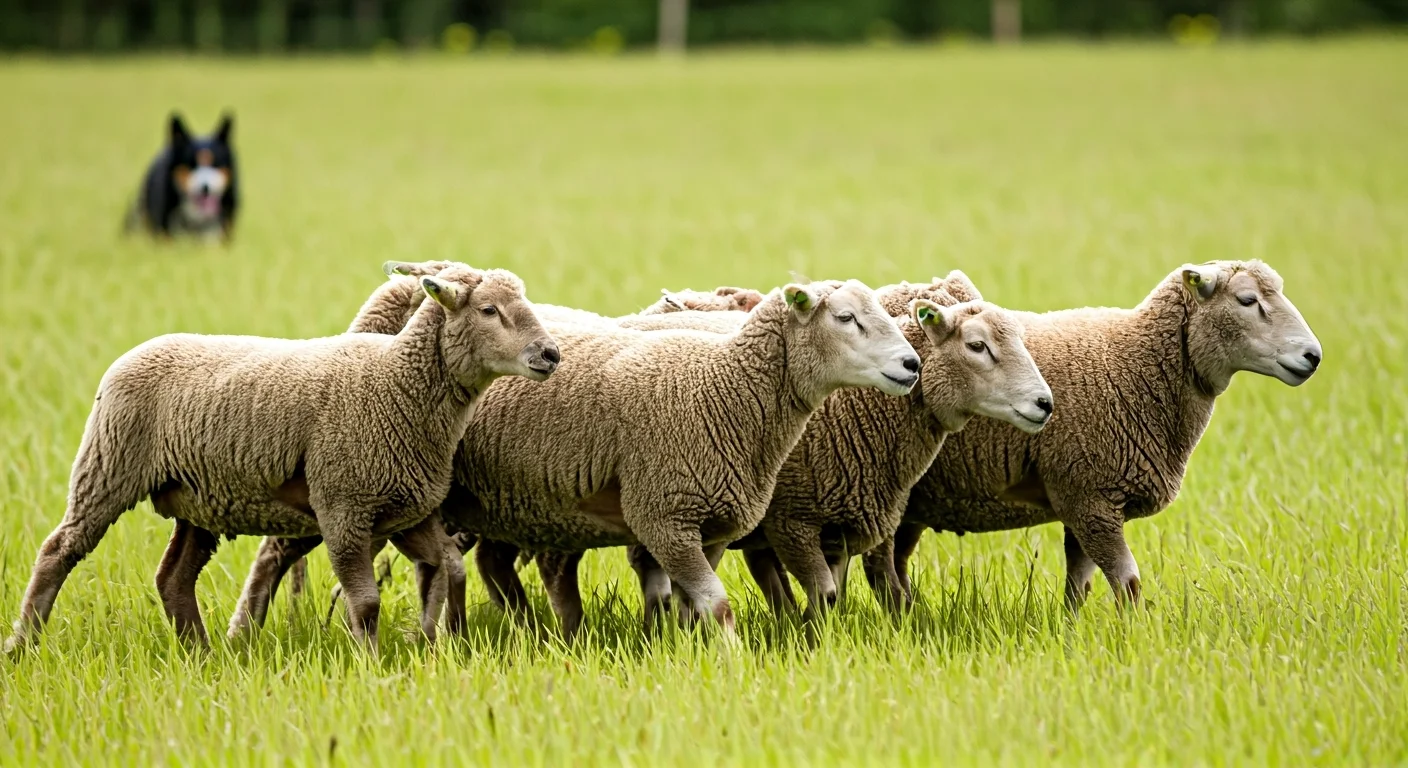
What Championship-Level Handlers See
I have had the opportunity to watch some of the best American handlers work stock at close range during clinics and training days. The difference between their perception and the perception of developing handlers is not what they know intellectually. It is how quickly they process what they see.
A developing handler looks at a situation where the sheep are drifting offline during the fetch and asks, “Why is the sheep doing that?” and spends several seconds working toward an answer. In that time, the sheep have drifted further. The dog has adjusted incorrectly. The line has become genuinely compromised.
A championship-level handler sees the same situation and has already issued a correction before consciously formulating the question. The pattern recognition runs faster than deliberate thought. They have seen this configuration of sheep-dog-terrain hundreds of times, and the response is automatic.
This automatic processing is not a gift. It is built through repetitive, attentive observation across many years. Every run you watch, when you are watching the right things, contributes to this database of patterns. Every run you half-watch while talking to the person next to you does not.
The handlers who develop the skills that distinguish champions from consistent competitors typically describe a turning point where sheep started to make sense, where the flock’s behavior stopped being random and started being readable. That turning point comes from observation. It cannot be rushed, but it can be accelerated by watching deliberately rather than casually.
The Practical Takeaway
If you are competing at any level below Open, I would bet that improving your ability to read sheep will improve your scores faster than improving your dog’s technique or your whistle timing. The reason is that most errors below Open level are strategic rather than technical. Handlers are asking their dogs to do the right thing at the wrong moment, or the wrong thing at the right moment, because they have misread what the sheep are about to do.
A dog that could execute a perfect outrun, lift, and fetch, but whose handler consistently sends corrections at the wrong moment based on misread sheep, will score inconsistently. The same dog with a handler who reads the sheep two seconds earlier will run cleaner because the corrections arrive before the problem develops rather than after.
The sheep are always telling you something. Learning to listen is the work.