The Most Consequential Decision in the Sport
You can change your training program. You can change your trainer, your trial schedule, your handling philosophy. You can learn to whistle better, read sheep more accurately, and manage your nerves under pressure. All of these variables are within your control.
The dog you choose is not fully within your control after you have chosen it. The genetics are set. The instinct is either there or it is not. The fundamental working ability that a dog carries into training is the starting material that all of your subsequent effort will work with.
This is why selecting a trial dog is the most consequential decision in the sport, and why people who have been competing for decades approach it with more care than decisions that feel objectively larger.
I have watched handlers spend ten years developing dogs that, in retrospect, never had the genetic foundation for the work they were asking of them. I have watched handlers find genuinely exceptional dogs through routes they did not expect. The patterns in these stories tell you something useful about what to look for and what to avoid.
What Genetics Provide (And What They Do Not)
The genetic component of herding ability is real and significant. This is not a controversial claim in the trial community, though it generates debate about specifics. A Border Collie bred from working lines for multiple generations carries, probabilistically, a set of traits that make competitive herding more achievable: high herding instinct, biddability at distance, stamina for sustained field work, and the eye behavior that makes sheep-control possible without physical contact.
These traits are probabilistic, not guaranteed. A well-bred dog from excellent working lines may still lack the specific combination of traits that produces an Open-capable dog. A litter of puppies from champion parents will produce a range of working ability, with some pups showing exceptional drive and others falling toward the lower end of the range.
What genetics cannot provide is the dog’s full potential realized. That requires training, experience, the right handler-dog relationship, and time. A genetically exceptional dog with poor training may never reach its potential. A genetically average dog with exceptional training may exceed expectations. Neither of these facts changes the reality that starting with better genetic material raises your ceiling.
Understanding why Border Collies specifically dominate the sport’s genetics helps clarify what you are actually selecting for when you choose a working-bred Border Collie versus any other option.
Working Lines Versus Show Lines
Within any herding breed, and particularly within Border Collies, the distinction between working lines and show lines matters enormously. Show-bred Border Collies are selected for appearance, movement, and temperament in ways that are compatible with pet ownership and conformation competition. Working-bred Border Collies are selected almost exclusively for herding ability.
These are not the same dog dressed differently. After several generations of selection divergence, they differ in instinct, drive, physical structure, and mental intensity in ways that make them suited for entirely different purposes. A show-bred Border Collie may be an excellent companion and AKC competitor. It is unlikely to have the genetic foundation for USBCHA Open competition.
This distinction applies to most herding breeds. Australian Shepherds, Kelpies, and Collies all have show and working lines that have diverged significantly. The question “is this a herding breed?” is less useful than “is this dog from lines that have been selected for herding work within living memory?”
For a handler new to the sport, finding working-line breeders requires research. These breeders typically do not advertise heavily. They sell most puppies through reputation and referral within the herding community. Attending trials and asking who produced the dogs you see competing is the most reliable method.
What to Look For in a Litter
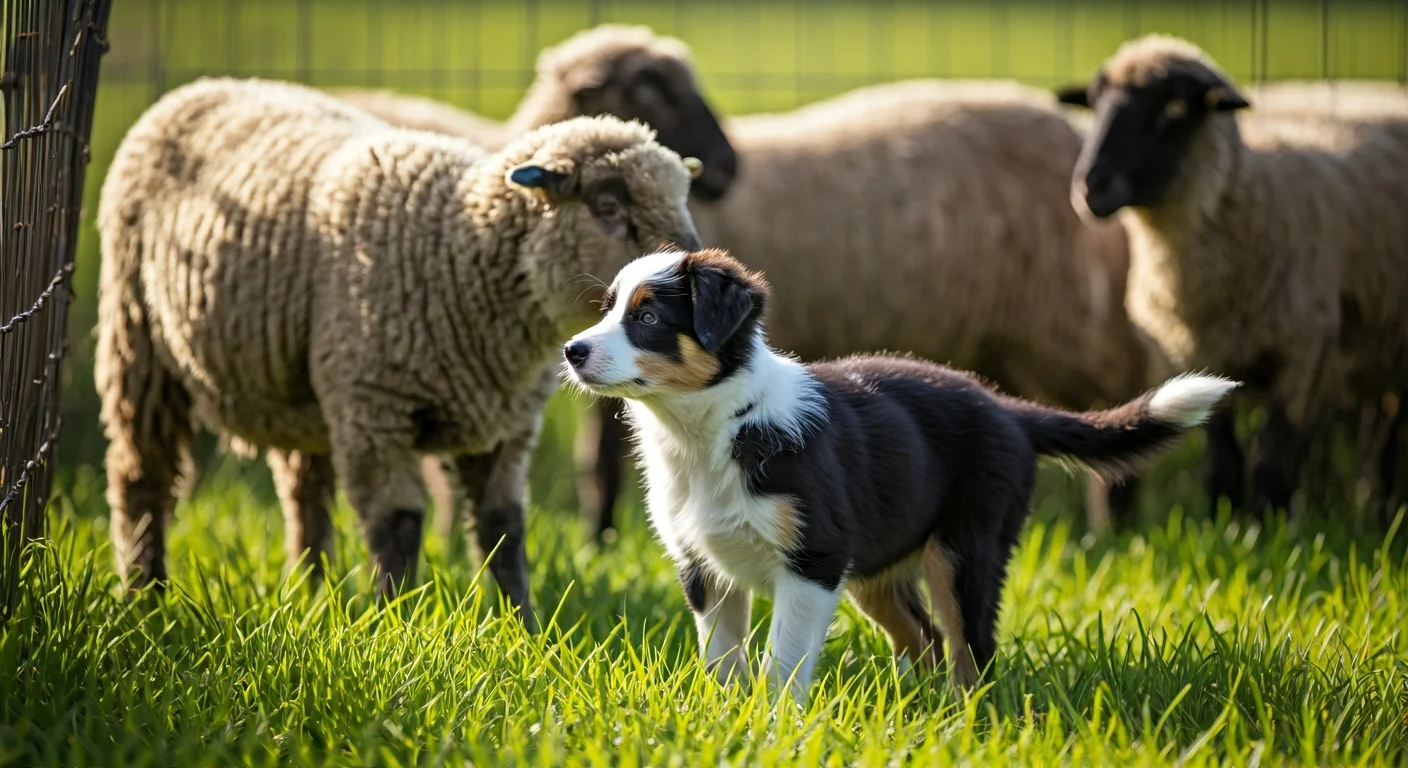
When you have identified a working-line breeder with relevant production history, the question becomes how to select an individual puppy. The short answer is that you cannot reliably evaluate herding ability in an eight-week-old puppy. The traits that matter most, instinct, biddability at distance, eye strength, do not manifest clearly until dogs are old enough to be exposed to stock.
What you can evaluate in a puppy includes:
Prey drive: Does the puppy stalk and stare at moving objects? Does it follow movement with its eyes in a way that suggests future herding eye? This is imperfect but directionally useful.
Biddability: Does the puppy respond to you? Does it follow you and engage with your movement? A puppy that is interested only in its environment and not in human interaction is showing a trait that may make herding training more difficult.
Health and structure: Vet checks, hip and elbow evaluations, eye certifications, and genetic health testing matter for the dog’s long-term ability to do physical work.
Dam’s working ability: If you can watch the mother work stock, you have useful information. Dams pass working traits to offspring at higher rates than most other factors in puppy selection.
The training approach that successful handlers use with young dogs typically involves instinct testing at around six to twelve months, when the dog’s working response to stock becomes assessable without the full demands of trial training. This assessment should inform whether to invest fully in trial development or redirect expectations.
The Adult Dog Option
Buying an adult dog that is already started or trained for herding work is a legitimate alternative to raising a puppy. For handlers who want to compete sooner, or who recognize that they do not have the experience to develop a puppy from scratch, a trained adult dog offers advantages.
The disadvantages are significant enough to understand clearly. An adult dog trained by someone else may not immediately respond to a new handler. The dog and handler relationship, which is the foundation of trial performance, requires development that takes months to years. A dog that was excellent with its original handler may perform poorly initially with a new one.
Additionally, adult herding dogs for sale raise an obvious question: why is a trained herding dog available? Sometimes the reason is benign, a handler retiring, a family situation changing, a dog that progressed through training but whose owner is not suited to trial competition. Sometimes the reason is that the dog has a problem the seller is not disclosing. Buying an adult herding dog requires more thorough evaluation and more skepticism than buying a puppy.
That said, the right adult dog with the right new handler can develop into a competitive team faster than starting from scratch. Handlers who bought adult dogs and won significant trials are not rare. The path requires careful vetting and patience through the relationship-building phase.
The Rescue Question
Whether a rescue dog can become a competitive herding dog is a question that comes up frequently and generates strong feelings in the herding community.
The honest answer is that some rescue dogs have sufficient working instinct for herding competition. Dogs that end up in rescue are there for various reasons, and some of those reasons have nothing to do with working ability. A Border Collie surrendered by a family that could not manage its energy may have excellent herding instinct that was creating problems in a non-herding household. A dog surrendered by a farm for being too much for the work environment may have exceptional drive that needs competitive outlet.
The practical challenges are real. Rescue dogs often have history that affects their behavior and training receptiveness. Trust issues, anxiety, and learned responses to pressure all complicate herding development. The time investment to address these issues before herding training can effectively proceed is substantial.
For handlers with experience working through behavioral issues and patience for an extended development timeline, a rescue dog with identified herding instinct can become a competitive dog. For handlers new to the sport who want a faster path to competition, a rescue dog is a harder starting point.
The organizations focused on breed-specific rescue for Border Collies and Australian Shepherds often do instinct testing before placement, and some specifically seek homes that plan to work their dogs. These placements can be good matches for experienced handlers.
The Financial Reality
The cost of acquiring a well-bred working Border Collie from competitive bloodlines has increased significantly as the sport has grown. Puppies from litters where parents have national-level credentials now regularly cost two thousand dollars or more. Adult trained dogs with demonstrated Open capability can cost five to ten thousand dollars or beyond.
These prices reflect genuine market dynamics. The supply of well-bred working puppies is limited because the breeders producing them are not operating commercial puppy mills. They have one or two litters per year from selected pairings. Demand from both the herding trial community and from farmers and ranchers who want working stock dogs exceeds supply consistently.
For handlers who cannot access this price range, the options are:
Research breeders with solid working programs but less national visibility. Good dogs come from litters that have not produced national champions. The parents need working ability, not celebrity.
Consider a breed other than Border Collie if the purpose is genuine stock work rather than specifically top-level USBCHA competition. Kelpies, working-bred Aussies, and English Shepherds from working lines are often available at lower price points from practical stock dog programs.
The class system provides a realistic map of what different dogs can achieve at different levels. Not every competitive herding goal requires a dog from the most expensive bloodlines. Understanding what level you are realistically aiming for informs what caliber of dog you actually need.
What I Would Do
If someone asked me today to advise them on acquiring a trial dog from scratch, here is what I would tell them.
Before you buy any dog, spend time watching trials. Go to three or four events across different venues and levels. Watch the dogs that are winning and the dogs that are struggling. Notice what you are seeing. Then watch the dogs of the breeds or types you are considering and evaluate honestly what gap exists between those dogs and the winning ones.
Talk to handlers rather than breeders first. Ask what lines they would use if they were starting over. Ask what they have seen from different programs. The trial community talks about dogs and bloodlines constantly and honestly. This knowledge is freely available if you ask the right people the right questions.
Get on a waiting list for a puppy from a source you have vetted rather than purchasing urgently what happens to be available when you are ready to buy. Urgency produces poor decisions in dog selection more reliably than in almost any other context.
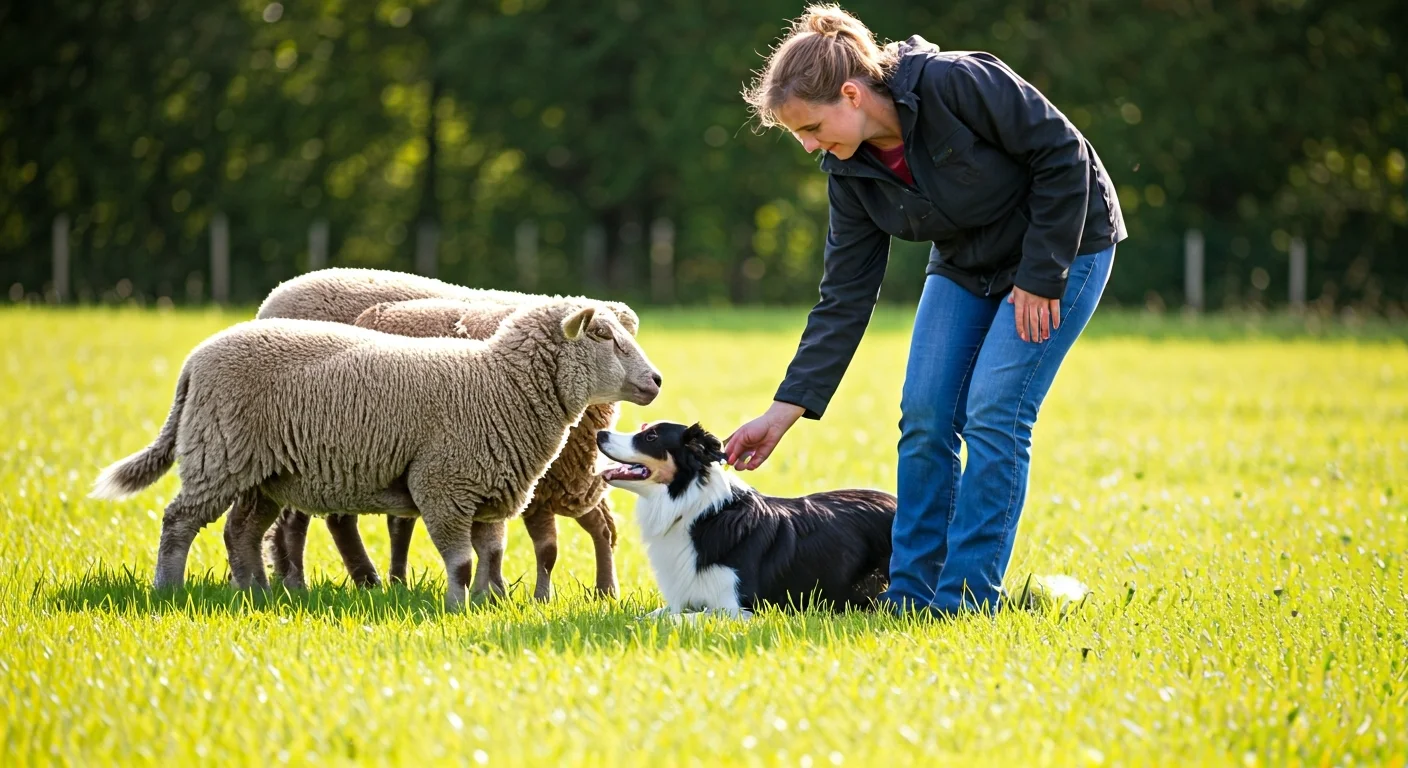
And finally: be honest with yourself about what you can provide. The best working-bred Border Collie in the world needs daily physical and mental exercise, regular access to stock, and a handler capable of developing its potential. If your situation does not reliably provide those things, the dog will be frustrated and the relationship will be difficult. The right dog for you is not always the highest-potential dog available. It is the dog whose needs you can actually meet.
The sport’s most successful long-term competitors are the ones who found sustainable matches between what they could provide and what their dogs needed. That compatibility, more than any genetic credential, is the foundation of a partnership worth having.