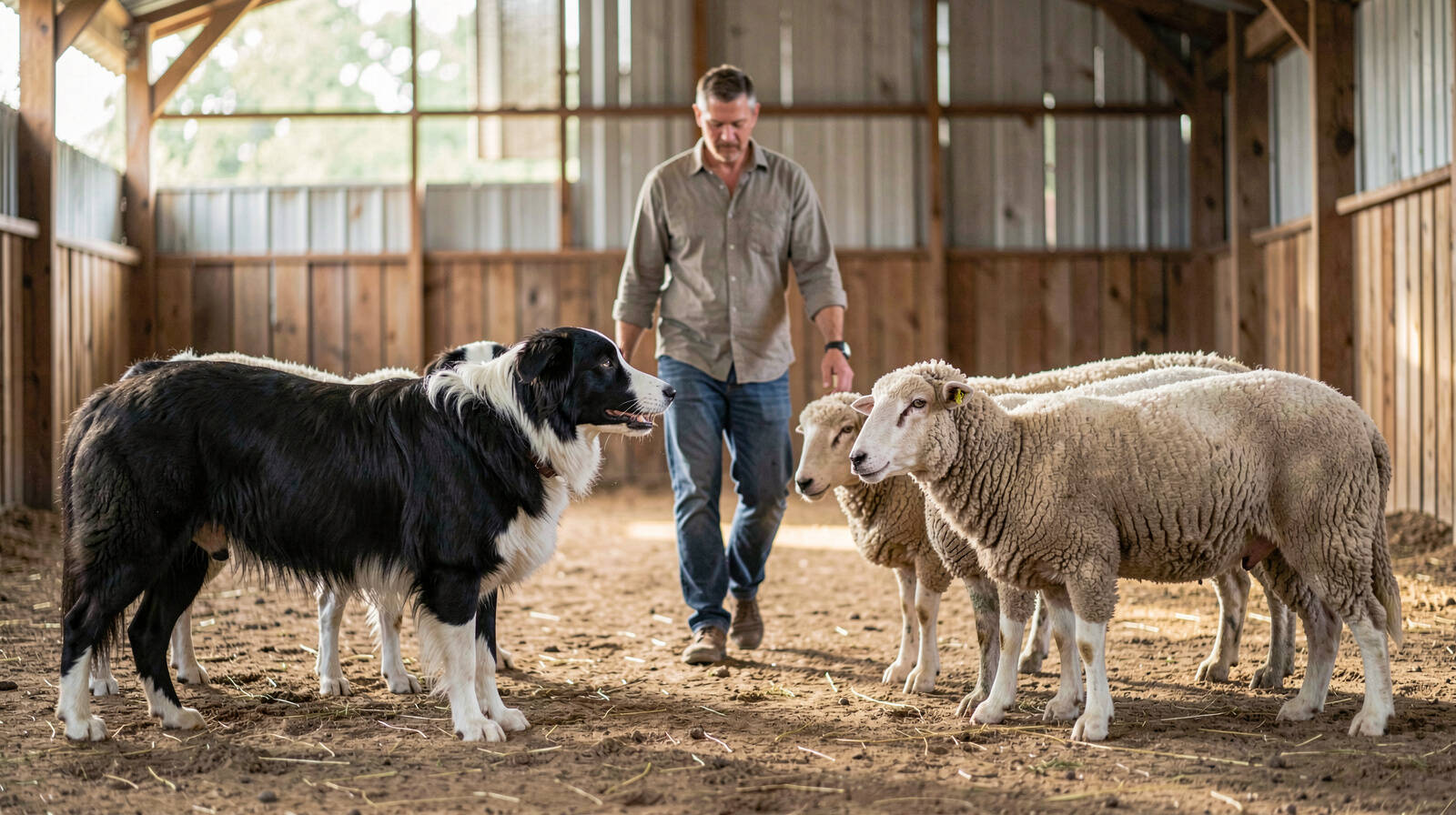
The Phase That Contradicts the Training
Every other phase of a trial rewards the same instinct: keep the sheep together. The outrun gathers them, the fetch brings them as one, the drive moves them as a unit, the pen holds them tight. Then comes the shed, and the handler asks the dog to do the exact opposite, to come into the group and split it apart.
For the dog, this makes no sense. It has spent its entire working life learning that a gap between sheep is a problem to be closed. Now the gap is the goal. That contradiction is why shedding breaks more polished runs than any other phase, and why dogs that gather beautifully can fall apart the moment they are asked to divide.
Understanding the shed means understanding that you are fighting your own training.
Inside the Shedding Ring
The shed is done inside a marked ring, often a large circle of sawdust or paint on the field. The rules vary by association, but the principle is constant: the handler must separate a specified number of sheep (sometimes any group, sometimes collared or marked individuals) and the dog must take control of the shed group and hold them apart long enough for the judge to call it complete.
The ring matters more than newcomers expect. Sheep want to leave it and rejoin the rest of the world; the handler and dog have to keep the whole group settled inside the boundary while looking for the moment to split. A group that is circling, drifting to the edge, or pressing to escape gives no clean opening. The first job is not to shed at all. It is to settle the group into a slow, readable shape so a gap can appear.
This is patience work, and it is the same flock-reading skill that decides so much earlier in the run, the kind of sheep reading that separates handlers who force the work from those who wait for it.
Reading the Gap
A shed cannot be created out of nothing. The handler waits for a natural gap to open as the sheep mill, then calls the dog through it. The skill is reading which gap is real.
A real gap has three qualities: it is wide enough for the dog to come through cleanly, the sheep on the near side are facing or moving away from the rest, and the gap is holding open rather than closing. A false gap is one that looks open for a heartbeat but is already collapsing as the sheep turn back toward each other. Call the dog into a false gap and it arrives to find solid wool, the sheep flow back together, and the attempt is wasted, often unsettling the whole group for the next try.
Good handlers position themselves to widen the odds. By moving to influence the group’s shape, they encourage the sheep to string out slightly rather than bunch, which makes honest gaps appear more often. They are not waiting passively; they are quietly stacking the deck.
The Dog Coming Through the Hole
When the gap is right, the command sends the dog in, between the sheep, and then immediately asks it to turn and face the group it has just split off. This is the moment everything hinges on. The dog must commit fully, no hesitation, because a half-hearted entry lets the sheep close around it, and it must then switch instantly from coming-in mode to holding mode.
That switch is the technical heart of shedding. The dog has to push hard to enter, then check itself and hold steady against sheep that desperately want to rejoin their flock. Too much push and it shoves the shed group away or scatters them; too little and the gap closes behind it. The best shedding dogs have a presence, an eye and a confidence, that pins the separated sheep in place without chasing them. This is the same calibrated pressure that good handling demands everywhere, concentrated into a few critical seconds.
Why Nerves Kill the Shed
The shed comes late in the run, often after a clean outrun, fetch, and drive that the handler badly wants to protect. That is exactly why nerves wreck it. With points already on the board and the finish in sight, handlers rush. They call the dog into the first half-gap out of impatience, snatch at sheep that are not settled, and tighten their commands until the dog feels the tension and overcommits.
The runs that hold together are the ones where the handler treats the shed as if there were all the time in the world. Settle the group. Wait for an honest gap. Call the dog with the same calm voice used on the outrun. A handler who can keep their breathing steady inside the ring has already won most of the shed; the dog reads composure as clearly as it reads panic.
Building the Shed at Home
Shedding is the phase most worth drilling away from competition, because the dog has to unlearn an instinct, and that takes repetition. Start with a quiet, settled group and a generous gap, rewarding the dog for coming through and turning, not for the speed of it. Keep early sessions short; shedding is mentally taxing and a frustrated dog learns to dread it.
Progress to smaller groups and tighter gaps only as the dog’s confidence holds. Many handlers introduce shedding too late and too rarely, then wonder why it collapses under trial pressure. Like most of the work that decides placements, it is built in the unglamorous weeks of training between trials, not on the day.
The shed will always be the phase that asks the dog to betray its own training. Handle it with patience and an honest gap, and it stops being the place good runs go to die.