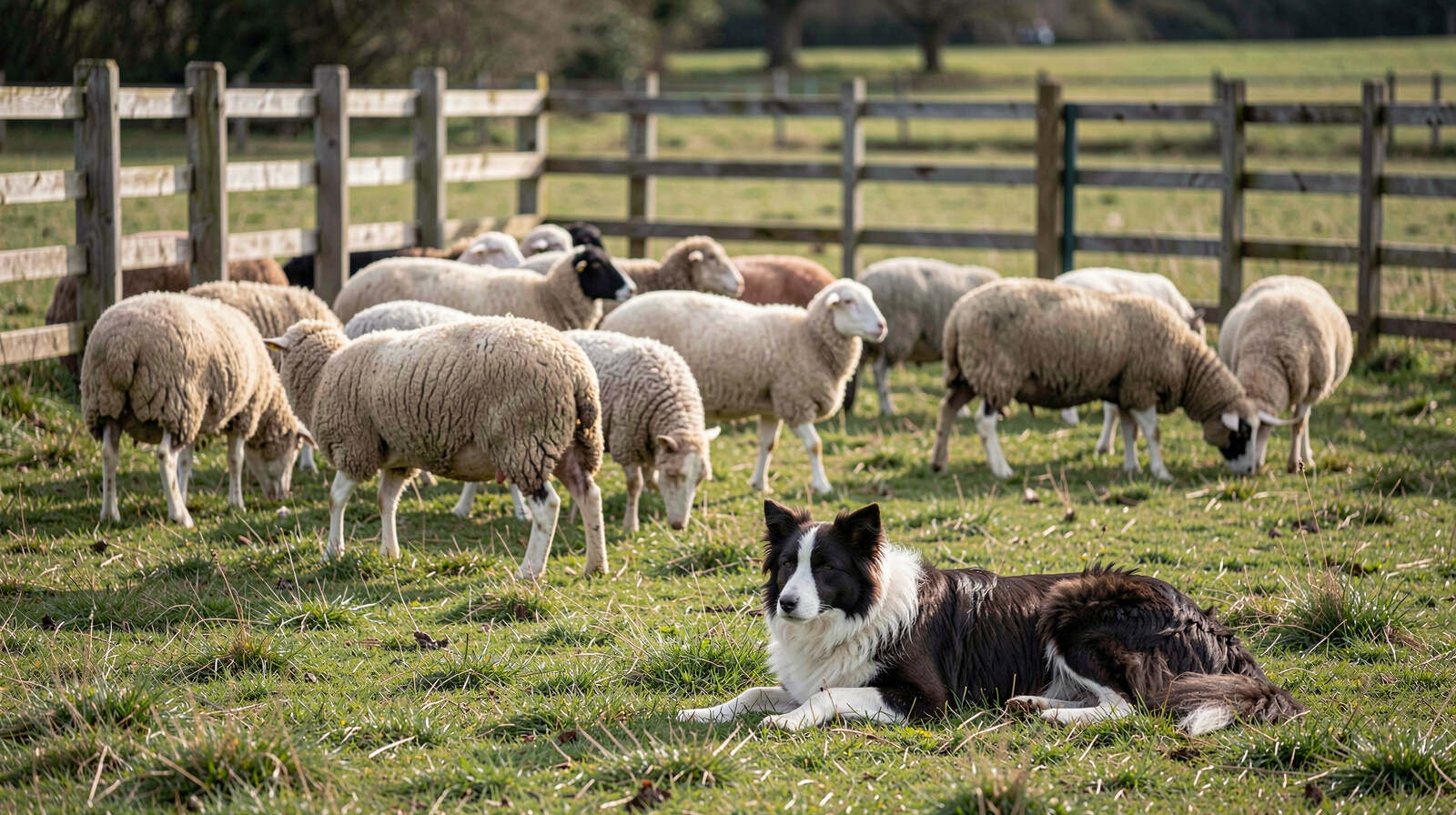
The Variable You Did Not Choose
You can train your dog for two years, drive eleven hours to a trial, and lose your run in the first thirty seconds because of five animals you have never met. The sheep on a trial field are not a neutral backdrop. They are the single biggest variable a handler cannot control, and the gap between an easy run and an impossible one often comes down to one question: where did these sheep come from?
Most newcomers never ask it. They walk to the post, send the dog, and react to whatever happens. The handlers who place consistently do something different. They find out what kind of stock they are about to work long before their number is called, because the answer changes the plan completely.
There are really two worlds of trial sheep: dog-broke stock that has learned how to behave around a working dog, and range sheep that have spent their lives avoiding everything that moves. Understanding the difference is not academic. It is the foundation of a realistic run plan.
What “Dog-Broke” Actually Means
Dog-broke sheep have been worked by dogs repeatedly until they accept the dog’s authority as a normal part of life. They have learned that a dog at twelve o’clock means move off, that turning to face a dog rarely ends well, and that walking calmly in a group is safer than scattering. This is not training in the way we train dogs. It is conditioning, built through dozens or hundreds of exposures.
Dog-broke does not mean tame. It means predictable. A dog-broke ewe still reacts to pressure, still has a flight zone, still wants to return to her preferred direction. But she reacts in patterns a handler can anticipate. She lifts cleanly when the dog reaches the balance point. She flocks rather than splits. She gives the pen a fair chance instead of treating it as a death trap.
Clinics, lessons, and most novice and pro-novice classes run on dog-broke sheep on purpose. The goal at that level is to let dogs and handlers learn mechanics without the stock blowing up every thirty seconds. If you have only ever trained on the same settled flock, your dog has been working dog-broke sheep whether you called it that or not.
Range Stock: The Other Extreme
Range sheep come off large pastures or open country where they may see a human on horseback a few times a year and a dog almost never, or only as a predator. They are reactive, fast, and deeply suspicious. Their flight zone is enormous. A range ewe will trigger off a dog that is still eighty yards away, and once she decides the dog is a threat, she commits hard, either bolting or turning to fight.
Range stock is not “worse” stock. In many ways it represents real shepherding, the original purpose the whole sport descends from. But it punishes mistakes brutally. An outrun that comes in even slightly tight will blow the lift apart. A dog with too much push will scatter the group before the fetch begins. The margin for error shrinks to almost nothing.
The big Western US trials and the classic British hill trials lean toward heavier, less-broke range-type sheep precisely because they test the things that matter at the top of the sport: a dog’s natural feel for stock, its ability to read pressure, and a handler’s discipline. A good run on genuine range sheep tells you far more about a team than a clean run on settled clinic ewes.
How Stock Gets Sourced and Set Out
Behind every trial is a stock manager whose job most spectators never think about. Sourcing trial sheep is a real logistical problem. Organizers either own a flock, lease one, or borrow from local producers. The sheep have to be sound, roughly uniform in size, free of disease, and available in enough numbers to run a full field of competitors without exhausting the same animals.
This is why “set out” matters so much. The set-out crew positions a fresh group of sheep at the top of the field for each run, holding them with a dog or by hand until the competing dog arrives at the balance point, then quietly withdrawing. A good set-out team produces consistent, fair runs: sheep standing calmly, grouped, facing a neutral direction. A poor set-out, or sheep that fight the set-out dog, hands one competitor a settled group and the next competitor five animals already wound up and looking for an exit.
If you want to understand why two handlers running “the same sheep” can have wildly different experiences, the art and strategy behind course design and set-out is a large part of the answer. The field looks identical. The stock condition is not.
Heavy, Light, and Why It Changes Your Plan
Handlers describe sheep as heavy or light, and stock origin drives both tendencies. Heavy sheep resist movement and need real presence from the dog to get going. Light sheep react to the smallest pressure and move before you want them to. Dog-broke flocks often run on the heavier, stickier side because they have learned the dog is not actually going to hurt them, so they call its bluff. Fresh range sheep more often run light and explosive, moving off the faintest sign of a dog.
This distinction rewrites your run plan:
- On heavy, dog-broke sheep, you generally want a dog with enough power and confidence to keep them walking, and a handler willing to ask for more push without overcooking it. The risk is a dead stop, sheep planted and refusing to move at the pen or in the corners.
- On light range sheep, you want a dog that can give ground, take a wider outrun, and hold pressure off until the sheep settle. The risk is overpressure: a single hard flank scatters the group and the run is gone.
The complication is that most groups are mixed. One bold leader can carry a whole group’s behavior, which is why experienced handlers identify the dominant sheep early. Reading those individual temperaments before you send your dog is a skill in itself, and it connects directly to reading sheep behavior for trial success. Stock origin tells you what to expect on average. Reading the actual five in front of you tells you the truth.
Stock Quality and Scoring Fairness
Here is the uncomfortable part of the sport almost nobody puts on a flyer: inconsistent stock makes scoring less fair, and everyone knows it. Judges score the dog’s work, but the dog’s work is shaped by the sheep it draws. Draw a settled group and a clean run is achievable. Draw the five animals that have been run six times and are now sour, or a fresh range bunch that breaks on the lift, and even a brilliant dog can post a mediocre score.
Good trial management fights this with planning. Organizers rotate stock so no group is overworked, keep set-out consistent, and try to bring enough sheep that animals get rest between runs. The draw, the random order in which handlers run, exists partly to spread this luck around: over a season, everyone eventually draws good sheep and bad. Understanding how judges evaluate runs helps here, because a fair judge accounts for the lift and the difficulty of the stock rather than penalizing a dog purely for sheep that were determined to misbehave.
You cannot remove the luck entirely. You can stop pretending it does not exist. The handlers who complain that “the sheep beat me” learned nothing. The handlers who study why those sheep behaved that way come back with a better plan.
Train on Stock You Do Not Own
The practical takeaway is simple and most amateurs ignore it: if your dog only ever works the same flock, neither of you is ready for trial stock. Your sheep know your dog. Your dog knows your sheep. That comfortable familiarity collapses the moment you face five strangers at a trial.
Seek out different sheep deliberately. Beg time on a friend’s range ewes. Pay for clinic sessions that use unfamiliar dog-broke stock. Volunteer on set-out crews, where you will watch hundreds of sheep react to dozens of dogs and build a mental library no book can give you. Working varied stock is one of the most reliable ways to close the gap, and it belongs in any serious between-trial training routine.
Where your trial sheep came from is decided long before you arrive. What you do with that knowledge is entirely yours. Find out what you are running. Build the plan around the sheep, not around the run you wish you were having. That single habit will move you up the placings faster than another year of drilling outruns on the same tired flock.