The Sound That Moves Sheep
Stand at a herding trial and close your eyes. You will hear something that sounds like a strange, uneven orchestra: sharp trills cutting across the field, sustained notes hanging in the air, abrupt blasts followed by silence. These are not random noises. They are a language, developed by each handler for their specific dog, and the fluency with which that language is spoken determines more about trial outcomes than most spectators realize.
I have spent seventeen years listening to handlers whistle at trials. What began as ambient noise eventually resolved into something I could partly decode, not because there is a universal dictionary of herding whistles, but because patterns emerge when you pay attention long enough.
The whistle system is, in many ways, the invisible architecture of the handler-dog partnership. You cannot see communication, but you can hear it. And when you learn to hear it properly, the entire sport opens up.
Why Whistles Over Voice
New handlers often start with voice commands. “Come bye” sends the dog clockwise around the sheep. “Away to me” sends it counterclockwise. “Lie down” stops the dog. “Walk up” brings it forward. The words are traditional, tracing back to the Scottish and English shepherding heritage that shaped the sport.
Voice works at close range. It carries emotion, which can be an advantage or a devastating disadvantage depending on the handler’s state of mind. A calm, authoritative voice steadies a dog. A tense, frustrated voice amplifies every problem on the field.
But voice fails at distance. At Open trial lengths of 400 to 600 yards, a human voice does not carry reliably. Wind steals it. Terrain deflects it. The dog at the far end of the field, working sheep the handler can barely see, needs something that cuts through all of it.
That something is the whistle.
“I switched to whistles fully at about 300 yards and never looked back,” handler Vergil Holland told me after a training clinic in Virginia. “My voice carries emotion I do not always want to transmit. The whistle is clean. It is either the right note or the wrong note. The dog does not have to interpret my mood.”
Holland’s observation touches on something I have heard from many handlers: the whistle disciplines the handler as much as it directs the dog. You cannot mumble a whistle. You cannot half-commit to it. The whistle demands clarity, and clarity is what dogs at distance need.
The Mechanics of Whistle Systems
There is no standardized whistle code in herding trials. Each handler develops their own system. The core commands typically number between six and ten:
Come bye (clockwise flank): usually a specific pattern of notes, often two-toned.
Away to me (counterclockwise flank): a different pattern, distinct enough from come bye that the dog cannot confuse them at distance.
Lie down / stop: typically a single sustained note, sometimes a sharp blast.
Walk up: often a series of short, evenly spaced notes that create forward momentum.
Steady / take time: a modulating tone that slows the dog without stopping it.
Look back: used primarily in double lift situations, telling the dog to turn and find additional sheep.
That’ll do / recall: calling the dog off sheep entirely.
The specific sounds vary wildly between handlers. What matters is that each command is distinct from every other command, consistent in its delivery, and loud enough to reach the dog at whatever distance the trial demands.
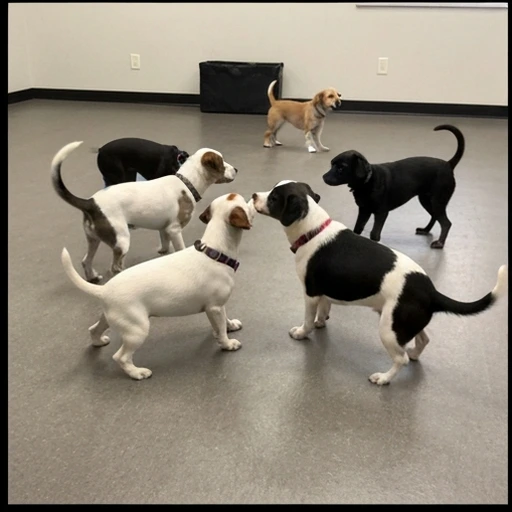
“I spent three months just practicing my whistles without a dog,” admitted handler Sarah Trainor, who competes at Open level. “My trainer told me that if the whistle was not second nature, I would hesitate at the post, and that hesitation would cost me. She was right.”
Trainor’s experience is not unusual. The mechanical skill of producing clear, consistent whistles under pressure takes dedicated practice. Handlers who neglect this work discover the cost at trials, where nerves constrict their throat, dry their mouth, and turn sharp commands into uncertain squeaks.
Whistle Types and Equipment
Most American trial handlers use a lip whistle, producing sound by shaping their mouth and blowing across their tongue or teeth. This approach requires no equipment and cannot be dropped, but it demands technique and produces sounds limited by the handler’s anatomy.
Some handlers use metal shepherds’ whistles, small curved plates held against the palate that amplify and focus the sound. These produce louder, more penetrating tones that carry farther in wind. The Logan whistle, developed by a Welsh manufacturer, is perhaps the most common among serious competitors.
The choice is personal. Handler Derek Fisher uses a metal whistle exclusively. “I can reach my dog at 600 yards in a crosswind. No way my lip whistle does that.” Handler Amanda Milliken prefers lip whistling. “I do not want to worry about a piece of metal in my mouth when I am already thinking about twenty other things.”
Both approaches work. What does not work is switching between them inconsistently or using equipment you have not practiced with extensively. I once watched a handler at a trial in Colorado try a new whistle for the first time in competition. The dog looked confused for the first thirty seconds, which at a trial is an eternity. They never recovered.
Timing: The Dimension Nobody Talks About Enough
The right command delivered at the wrong moment is the wrong command. This is perhaps the single most important thing I have learned about whistle work in seventeen years of watching trials.
Timing operates on two levels. The first is reactive: the handler sees something happening and whistles in response. The sheep are drifting left, so the handler sends a correction. This is necessary but insufficient at the highest levels.
The second level is predictive. The handler reads the sheep, anticipates what will happen, and whistles before the problem develops. The dog adjusts preemptively. The sheep never drift because the correction arrived before the drift began.
This predictive timing is what judges reward, even if they do not always articulate it in those terms. It produces the smooth, flowing runs where everything seems effortless. As we detailed in our analysis of what judges look for in scoring, the pace and rhythm that earn high marks depend almost entirely on whether commands arrive at the right moment.
“My best runs, I am ahead of the sheep,” explained handler Jack Knox at a training seminar. “I see what they are going to do and I tell my dog before they do it. My worst runs, I am behind. I am reacting to what already happened, and by then the damage is done.”
Knox’s insight maps directly onto what I observe from the spectator line. The winning runs at major trials feature minimal visible correction because corrections happen before problems become visible. The struggling runs feature constant correction because the handler is always catching up.
Training Whistle Responsiveness
A dog that knows its whistles is not the same as a dog that responds to its whistles. The gap between knowledge and obedience widens under trial pressure, and closing that gap is one of the central challenges of herding dog training.
Handlers who understand the deliberate training methods that champions use between competitions know that whistle responsiveness is not built in a single session. It develops through consistent reinforcement across varied conditions: different fields, different distances, different wind conditions, different levels of distraction.
“I practice recalls in the middle of interesting work,” explained handler Lyle Lad. “My dog is doing something he loves and I call him off. If he comes, we go right back to work. He learns that obedience does not end the fun. It is just part of the conversation.”
This approach builds the kind of trust-based obedience that championship handler-dog partnerships are built on. The dog responds not because it fears consequences but because it has learned that the handler’s commands lead somewhere worthwhile.
When Commands Fail
Every handler who has competed at enough trials has a story about commands failing. The whistle that came out wrong. The flank command the dog ignored. The moment at the post when the handler’s mind went blank and no sound emerged at all.
“I had a run at the 2023 Meeker Classic where my dog took a wrong flank on the drive,” a handler recounted at a post-trial gathering I attended. “I know I gave the right whistle. He heard something different. Maybe the wind changed it. Maybe he was reading the sheep and thought he knew better. We lost twelve points on that one moment.”
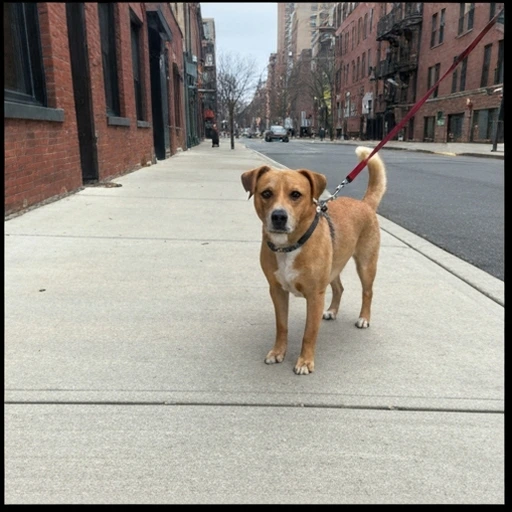
Communication failures in herding trials are not like communication failures in everyday life. There is no opportunity to repeat yourself, explain what you meant, or start over. The sheep are moving. The clock is running. The dog is 400 yards away making decisions based on what it heard, whether that matches what you intended or not.
This is why organizations like Herding Instinct Test emphasize evaluating a dog’s natural responsiveness to handler direction as part of instinct assessment. A dog with strong instinct but poor biddability presents a fundamentally different training challenge than a dog that naturally looks to its handler for guidance.
The Quiet Handlers
Among the most impressive handlers I have watched are the quiet ones. They whistle less than anyone on the trial field and their dogs work beautifully.
This is not laziness or disengagement. It is the ultimate expression of a communication system so refined that most of the conversation happens without sound. The dog reads the handler’s body position, the sheep’s behavior, and its own understanding of the course. The handler intervenes only when necessary, which in a well-trained partnership is surprisingly rarely.
“The fewer commands I give, the better my dog works,” said handler Patrick Shannahan at a trial I covered in Washington. “Every whistle is an interruption. If the dog is doing the right thing, why interrupt?”
This philosophy runs counter to what many novice handlers practice. New handlers tend to over-command, filling every silence with a whistle because silence feels like losing control. But the opposite is true. Constant commanding tells the dog it cannot think for itself, which produces a dog that stops thinking for itself, which produces runs that look mechanical and earn lower scores.
The journey from over-commanding to appropriate silence is part of what it means to progress through the trial class system. Started handlers whistle constantly. Open handlers whistle when it matters. The difference reflects not just the dog’s training but the handler’s growth.
Learning the Language
For newcomers attending their first trial as spectators, the whistle work will sound like chaos. This is normal. It took me years before the sounds organized themselves into something I could follow.
My recommendation: pick one handler and listen to their entire run. Note the sounds they make and when they make them. Watch what the dog does after each whistle. By the third or fourth run from that same handler, you will start hearing the vocabulary.
Then pick another handler and notice how different their system sounds. Same commands, different sounds, different timing, different style. The diversity is part of what makes the sport endlessly watchable.
The language of the trial field is spoken between two beings who have spent years learning to understand each other. What you hear from the spectator line is only the audible portion of a conversation that runs far deeper than any whistle can carry.
That conversation is worth learning to listen to. It will change what you see on the field, even before you understand every word.