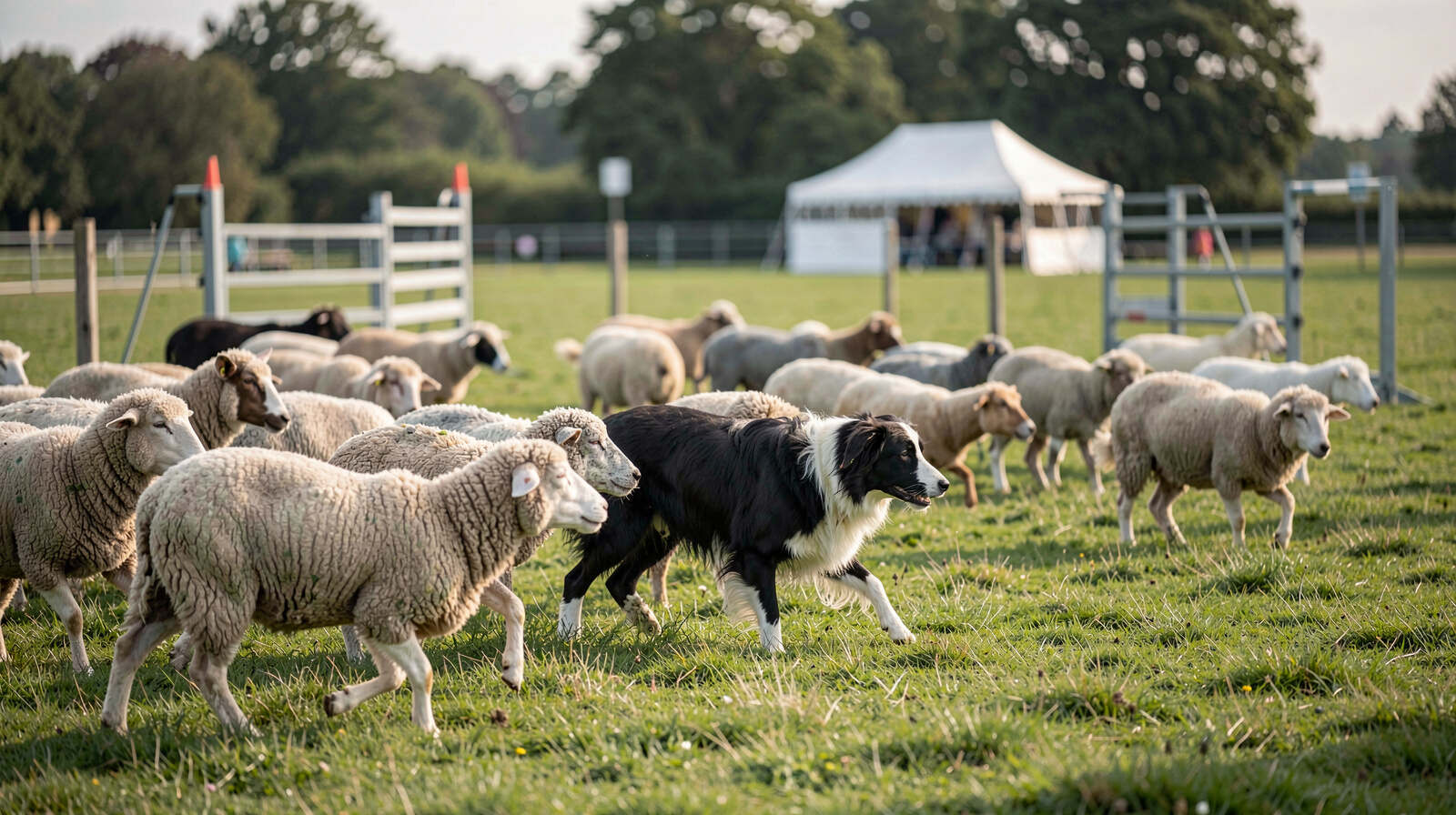
Entry paperwork looks simple until the colour line. The form asks for the dog’s registered name, call name, breed, sex, date of birth and a written description of colour and markings, and that last field is where even experienced handlers stall. The secretary copies whatever you write into the running order and the scorebook.
What do entry forms and scorebooks ask about a dog’s appearance?
The appearance block is short: colour, markings, and sometimes coat type or height at the shoulder. A USBCHA-style entry wants a brief colour note beside the class and the dog’s name, while AKC herding entries pull most of the description from the registration record. Either way the description travels to the scorebook and the running-order sheet.
What is the difference between a tricolour and a tan point pattern?
Tan point is the pattern; tricolour is one way that pattern shows up. A dog with tan points carries pigment in fixed positions: eyebrow dots, cheeks, chest, legs and under the tail. Handlers call the dog tricolour when those tan points sit on a black body with white markings, which describes most classic trial Border Collies. Blue merle is a marbled pattern over the black, routinely misread as tri by people counting colours rather than looking at where the pigment sits.
Where can a handler check the right colour term before closing date?
Verify the term rather than guess it, and verify it against a source that separates what the dog looks like from what its genotype might be. Border Collie colour terms are laid out colour by colour at bordercolliecolors.com, a guide that treats the visible description as the starting point and the genetics as a separate question, which is exactly the distinction an entry form needs. Check the dog against its photos and term definitions, write the term that matches the registration papers, and do it before the entry closes rather than at the secretary’s tent.
The fields people rush through
Once the colour line is settled, the rest of the form is easier but not free of traps. Class follows the progression from Started to Open: the form wants the class the team is entering now, not the one the handler hopes to be ready for by spring. Entering up a class to “see what happens” produces a short, expensive run and a judge who remembers it.
Organisation choice still shapes that line, because the differences between the USBCHA and AKC rulebooks decide what the dog is actually eligible to enter. A dog registered in one program may need a listing number, a height card or a breed-recognition step in another, and sorting that out is the work of weeks, not of the morning of the trial.
The contact fields matter more than they look. Trial secretaries use the phone number and email on the form to move a run order when a storm rolls in or a sheep change runs long. A handler who writes a number nobody answers has functionally asked to run blind.
Fees deserve a sentence of their own. Most local trials take entries in the twenty to fifty dollar range per run, payable with the form, and the fee is forfeited on a late scratch. Entering two runs on the same dog doubles the paperwork line by line: the secretary wants the description written out each time unless the form says otherwise, and copying it identically is the whole point of keeping the record straight.
Why the description follows the dog
The scorebook is not ephemeral. Scores feed annual points, and annual points decide who qualifies for the national events covered in our road to the USBCHA Finals. A dog’s written description becomes part of that record: secretaries archive scorebooks, and a dog whose colour description wanders from entry to entry creates small, fixable confusion that nobody should have to fix.
When the papers and the eye disagree, the papers win. Registration documents carry the description the registry accepted, and the entry exists to match that record, not to relitigate it. Handlers entering their first trials learn quickly that the secretary’s patience for corrections shrinks as closing date approaches.
Two habits save trouble. Keep a written note of the dog’s description, copied from the registration papers, in the same place as the entry confirmations, so every form gets the same words. And enter early: late entries are rarely accepted, and a handler who leaves the form to the last weekend has no time left to check a colour term against anything.
The Takeaway
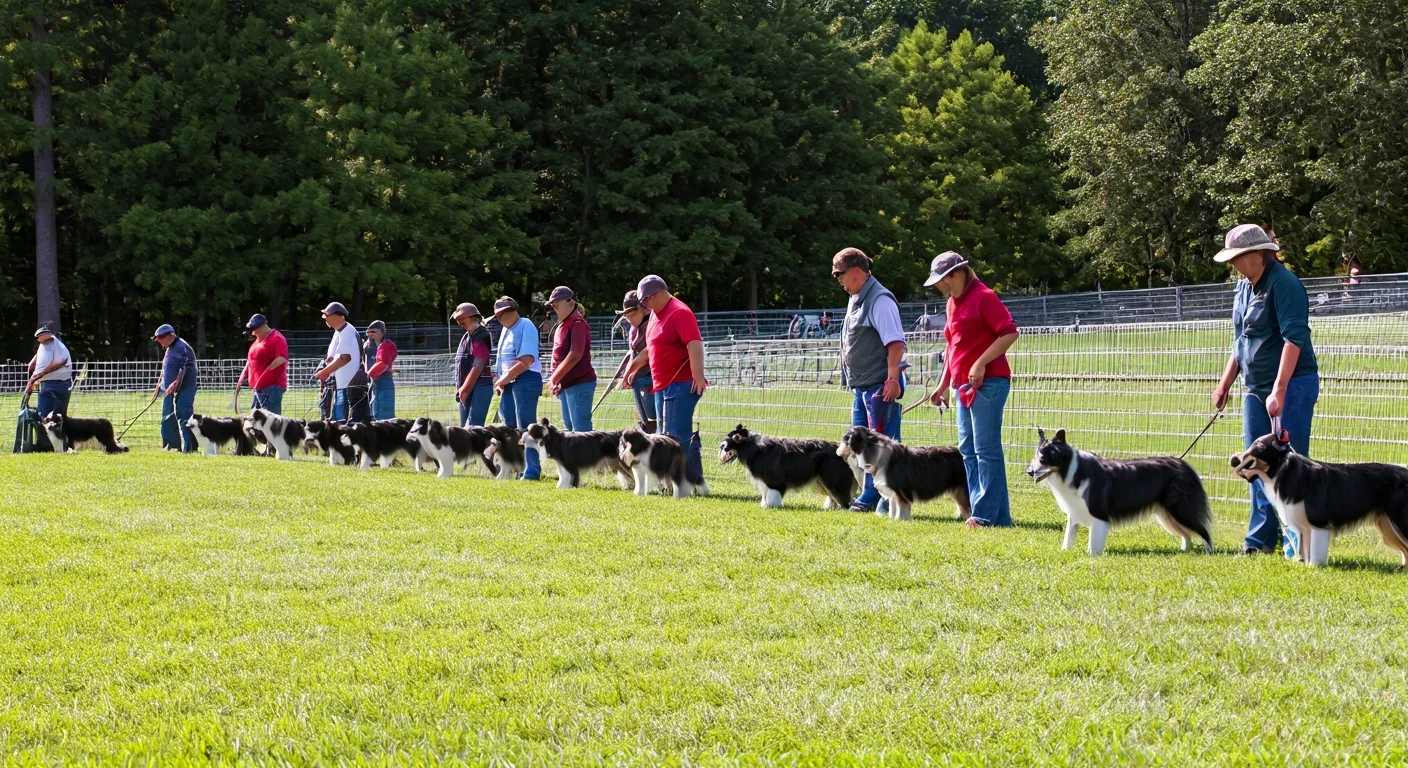
The description field is small but it lasts the whole weekend and outlives it in the scorebook. Write what the registration papers say, remember that tricolour names the three-colour dog while tan point names the pattern, and check an unfamiliar term against a colour guide before the form goes in. Handlers who treat the paperwork as part of the run rarely have to fix it at the tent.
Colour and markings fields on an entry form look simple until the dog is not a black and white border collie. Handlers who also keep a spaniel or another breed often borrow wording from that breed’s standard, which is why a working knowledge of terms such as solid, parti colour and roan helps. The American cocker breed reference explains how one breed’s standard names its colours and markings, and that vocabulary transfers well when you must describe a dog in a few words on a form or in a scorebook.
Colour and markings fields sit beside another question handlers answer less often: what the dog is for. A working breed entry describes function before appearance, and the black Russian terrier is a clear case, since its standard and its history explain why it was kept. Handlers who want the background can read the documented history and classification before filling in a form, because a breed’s original work shapes the wording a judge or scorebook expects. Write the colour first, then the work the dog was bred to do.
Describing a dog on an entry form is a written record, and so is a horse’s page in a stud book. Both ask the handler to put down what is actually there: colour, markings, age, and the work the animal has done. A dog’s colour is read at the pen; a horse’s ground work and steady starts are read in the load it moves. Breeders weigh pedigrees and mare records the same way handlers weigh a dog’s trial history. The habits behind draft horse driving and breeding show how written records and steady early work decide what an animal can be asked to do later.
A written description also travels beyond the entry form. The same colour and markings you record for a trial are the details a shelter reads aloud when a dog waits for a home, and handlers who cannot adopt still ask what they can do. The tasks vary by the time, the cost and the skill each one needs, from a single afternoon to a regular commitment. A clear account of helping a shelter dog shows where those hours fit around training and trialling.
A colour and markings description is only one part of what a trial entry form records about a dog, and the rest of the animal matters just as much once the run is over. Handlers who write these forms often keep a second set of notes at home, covering how the dog settles after work, how it behaves on walks and around visitors, and how much exercise its drive demands each day. Anyone filling in a form for a breed with strong working instincts can read more on living with an Australian shepherd before the next trial season begins.
Colour and markings are not the only place where close observation decides the wording. On the Niagara River, the same habit of checking depth, light and season separates a smallmouth bass from a walleye, and the field marks that hold at noon fail in flat evening light. Handlers who write dog descriptions face the same problem: a black and tan dog under cloud can read as tricolour in a photograph. The discipline is identical, so the notes on smallmouth bass, identification, Niagara River offer a useful parallel for anyone learning to describe what a form actually asks for.
Colour and markings on an entry form are only part of the picture. The judge and the scorebook also want the dog’s breed and working type, and those answers shape what the description should say. A handler writing “black and tan” for a kelpie is describing a coat, not a dog. The traits that matter at the post, eye, cast, and stock sense, belong to the breed, and the australian kelpie breed profile sets out what handlers check first and what each choice costs at home. Write the breed plainly, then the colour, then the markings.
Colour and markings descriptions also appear in breed-specific contexts, and the wording differs by breed. A handler who writes “black and tan” on a form for one breed may need “black, tan, and white” for another, and the order of terms matters on some registries. When a breed’s standard lists colours in a fixed sequence, that sequence is the safest model for the entry form. The American cocker breed reference shows how one breed organises its colour terms, which helps a handler transfer the same discipline to the form in front of them.
Colour and markings on an entry form describe one dog, but the same habit of writing down what a breed is supposed to be applies to every working dog. A handler who wants to see how a breed’s purpose is recorded can look at the documented history and classification of the black Russian terrier, where the FCI standard 327 sits in group 2 and the keeping questions come before any training. The entry form asks for less, yet the principle holds: write what the dog is, not what you hope it looks like.
Once the description is written, the same entry form often asks what the dog will actually do with its working life. A colour and markings note is a record, not a plan. Handlers who want a second outlet beside the trial field can read choosing a canine activity to match scent, movement or pace work to the dog in front of them. The description stays on the form. The decision about the dog’s other work belongs to the handler.
A colour and markings description is a written record, and written records work the same way in other stock and working animal fields. Breeders of heavy horses write down coat colour, white markings and pedigree in registries, and judges read those same details in the ring. Handlers who want to see how another tradition handles the paperwork can look at draft horse driving and breeding, where ground work, mare records and show classes are described. The habit transfers: describe what you see, in the order the form asks for it, and leave nothing to memory.
Writing a colour and markings description for an entry form is a small, careful task, and it shares a habit with other work around dogs: noticing what is actually in front of you rather than what you expect. Handlers who want to keep that habit useful away from the trial field can put it to work helping a shelter dog, where the tasks are sorted by the time, the cost and the skill each one needs. The same eye that catches a mismarked patch on your own dog can record a kennel dog’s colour accurately for someone else.
Colour and markings sit in the same part of the form as breed and registration details, and handlers who write them carefully tend to read the rest of the entry just as carefully. The same habit carries over to other breeds a handler may keep at home. A working handler who also keeps a companion dog still has to describe coat, weight and condition accurately, and the cocker spaniel breed profile sets out daily grooming, measured feeding and exercise needs in the same plain terms a trial entry asks for.
Once the colour and markings are written down, the same dog has to live somewhere. A working breed kept only for the trial field carries its drive into the house, the walk and every visitor at the gate. Handlers who write a careful description on the entry form often find the harder task is the daily one, and the practical notes on living with an Australian shepherd cover settling, coat care and feeding for a dog of that type. The form asks for a few words. The dog asks for the rest of the week.
Colour and markings are only one kind of field description, and the same discipline of looking applies elsewhere. Naming what you see depends on light, depth and season, whether the subject is a dog in the pen or a fish in moving water. A short piece on smallmouth bass, identification, Niagara River shows how those conditions change the marks a reader can trust. Write the dog’s entry the same way: note what the light allows you to see, and leave the rest for the judge.
A colour and markings description is a written identification, so the same habit of naming what you see rather than what you assume carries over to other fieldwork. Handlers who record a dog’s patches, mask and socks learn to separate a feature from a guess. The same discipline applies away from the trial field, where kangaroo wallaby differences rest on posture, size and markings rather than a fleeting glimpse. Write the entry form the way you would read a track: state the mark, not the impression.
Once the colour and markings field is filled in, the description follows the dog through every entry and scorebook, so the wording should match what a judge will see at the post. Handlers who keep working dogs at home often face the same question about durable gear, and the site’s article on untreated wood and natural branches covers wear checks, cleaning, sizing and replacement for chew items. Both tasks reward the same habit: describe or inspect the object plainly, then record what you find.
A colour and markings description is only one part of the paperwork a working dog carries. Handlers who later take on a rescue dog face a longer set of questions before any trial entry makes sense: whether the dog fits the household, what the first year will cost, and how to check an advert before travelling to see the animal. The site sets out those steps in its guide to household compatibility and full budget, which covers the identification checks and the first meeting. Reading it before you write a description for a dog you do not yet own saves time later.
A colour and markings description does more than satisfy the entry form. It follows the dog through the draw, the scorebook and the results sheet, and it is often the only line that identifies the animal to a judge who has never seen it run. Handlers who trial regularly learn to write it once and reuse it, because the same details serve at every level of the sport. That habit connects to a wider question about the sport: what a show weekend costs, from travel and lodging to entry numbers and hall budgets, and how those decisions shape the dogs that reach the post.
Colour and markings sit inside a wider question: what the dog was bred to do. A black and tan kelpie and a red heeler may share a working ancestry, yet the traits handlers check first differ by breed, and so does the cost of keeping each one at home. Handlers who write a description for the entry form often find the same traits matter when they choose their next dog. The australian kelpie breed profile reads the working side of the kelpie, the heelers and the Australian terrier, and sets out what each choice asks of a handler away from the trial field.